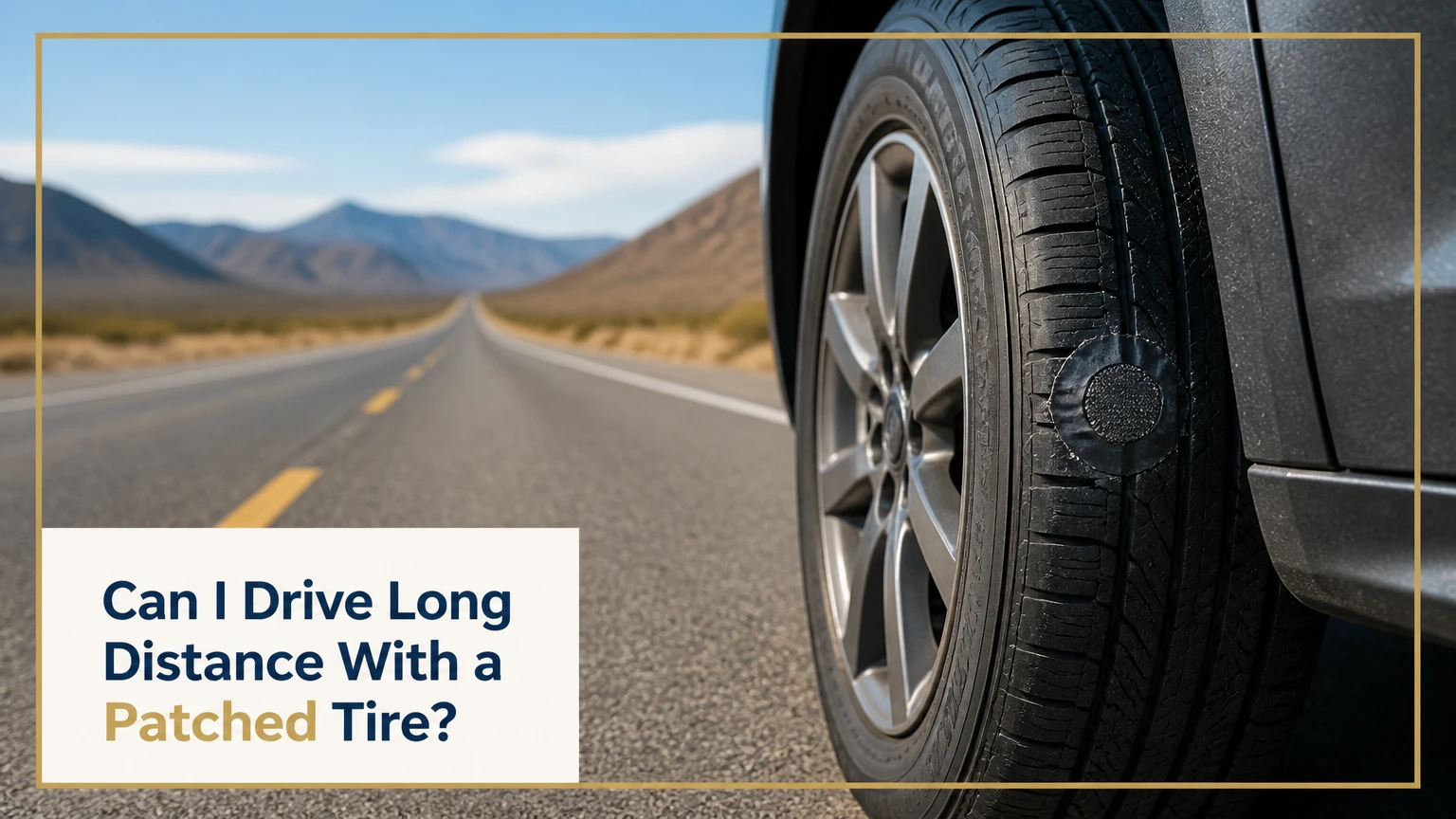
Yes, you can safely drive long distances with a patched tire, provided the puncture was permanently repaired using a USTMA-approved combination patch-and-plug unit applied from the inside of the unmounted tire casing. Temporary external string plugs or spray liquid sealants are not structural repairs and are strictly unsafe for highway speeds or extended trips.
Key Facts: Long-Distance Driving on Repaired Tires
- Approved Repair Standard: Only a 1-piece or 2-piece combination stem-and-patch installed from the inside is permanent and highway-safe.
- Maximum Puncture Diameter: Punctures cannot exceed 1/4 inch (6mm) in diameter.
- Approved Repair Zone: Damage must be located within the central tread area, strictly at least 1 inch (25mm) away from the shoulder and sidewalls.
- Speed Rating Limits: A combination patch-plug preserves the original tire speed rating up to 130 mph (210 km/h) unless restricted by specific tire manufacturer policies.
- Maximum Repairs Per Tire: A maximum of 2 permanent repairs are permitted per tire, provided they are spaced at least 16 inches apart and do not overlap.
What Makes a Tire Repair Safe for Highway Speeds?
A tire repair is safe for highway speeds only when it restores both the airtight integrity of the inner liner and the structural barrier that shields the steel belts from environmental exposure. Highway driving subjects tires to continuous flex cycles, centrifugal force, and thermal buildup reaching temperatures above 150°F (65°C).
When a nail or screw penetrates a tire, it creates two distinct structural failures:
- An Internal Air Leak: Air escapes through the inner rubber liner, depleting pressure and causing structural overheating.
- An External Moisture Pathway: The hole through the outer tread allows water, road salt, and debris to reach the internal steel belts and body plies.
A permanent repair utilizes chemical vulcanization—a process where cold-vulcanizing fluid chemically fuses the rubber patch to the tire’s inner liner while the rubber stem completely fills the puncture channel. This dual-action seal prevents pressurized air from escaping into the tire casing plies and blocks external moisture from rusting the steel belts, preventing catastrophic belt separation at high speeds.
Is Your Tire Puncture in a Repairable Location?
A tire puncture is repairable only if it occurs strictly within the central tread area, known as the puncture repair zone. The outer shoulders and sidewalls endure intense flexural stress during cornering and weight transfer, making permanent adhesion impossible.
To determine if your puncture meets industry safety parameters established by the U.S. Tire Manufacturers Association (USTMA), evaluate these critical spatial and physical criteria:
| Spatial & Physical Criteria | Safety Parameter | Hazard of Non-Compliance |
| Puncture Location | Tread face only (at least 1 inch / 25mm inside outer grooves) | Sidewall and shoulder patches fail from continuous cornering flex. |
| Maximum Hole Size | Up to 1/4 inch (6mm) diameter | Holes >1/4 inch sever steel belts, compromising structural load rating. |
| Puncture Angle | Less than 15 degrees from perpendicular | Angled punctures sheer internal patch edges during high-speed rotation. |
| Repair Spacing | Minimum 16 inches between repairs | Closely spaced repairs create compound weak spots in the carcass plies. |
| Remaining Tread Depth | Minimum 2/32 of an inch (1.6mm) | Patching bald tires creates extreme hydroplaning and blowout risks. |
| Tire Age Limit | Under 6 years from manufacture date | Aging rubber exhibits degraded vulcanization bonding strength. |
Which Tire Repair Methods Are Highway-Safe?
Only the combination patch-and-plug method is highway-safe for long-distance driving. On-the-wheel string plugs and liquid tire sealants are temporary emergency measures meant solely to reach a repair facility at reduced speeds.
┌────────────────────────────────────────────────────────────────────────┐
│                        TIRE REPAIR METHOD COMPARISON                   │
├───────────────────┬─────────────────────┬──────────────────────────────┤
│ Method            │ Durability          │ Highway Safety Verdict       │
├───────────────────┼─────────────────────┼──────────────────────────────┤
│ Combination Combo │ Life of Tread       │ SAFE for Long Distance       │
│ String Plug       │ Emergency (100 mi)  │ UNSAFE for Highway Speeds    │
│ Liquid Sealant    │ Emergency (50 mi)   │ UNSAFE for Highway Speeds    │
└───────────────────┴─────────────────────┴──────────────────────────────┘
1. Combination Patch-Plug (The Professional Standard)
This method uses a vulcanized rubber unit consisting of a solid stem attached to a flat backing patch. The tire must be dismounted from the wheel, allowing full inspection of the internal casing. The stem fills the carcass hole while the patch seals the inner liner, fully restoring structural integrity.
2. On-the-Wheel External String Plug
String plugs consist of sticky, resin-coated cord inserted through the tread from the outside without dismounting the tire. Because the tire is not unmounted, internal carcass damage remains hidden. Over time, highway heat softens the sticky resin, causing slow air loss and allowing water to corrode internal steel belts.
3. Chemical Liquid Sealants
Injected through the valve stem, liquid sealants coat the inner liner to clog air leaks. Liquid sealants do not fill the physical steel belt puncture, deteriorate rim surfaces, destroy TPMS pressure sensors, and imbalance the wheel at speeds above 45 mph.
How Does a Professional Tire Service Center Repair a Puncture?
A professional tire service center performs an 8-step internal vulcanization process to guarantee long-distance safety. Performing an external repair without dismounting the tire violates USTMA standards and creates severe highway blowout risks.
1.Dismounting and Casing Inspection:Prerequisite for internal structural evaluation.
The technician unmounts the tire from the wheel rim. The interior wall is inspected under high-intensity light for “marbling”—black rubber dust indicating the sidewall was crushed from low-pressure driving.
2.Puncture Channel Preparation:
A carbide cutter or low-speed drill cleans the puncture hole at a perpendicular angle. This removes jagged steel belt fragments and creates a uniform channel for the rubber stem.
3.Inner Liner Buffing:
The inner liner rubber around the entry point is scraped and buffed with a low-speed pneumatic buffer to create a velvety, textured surface for chemical adhesion.
4.Chemical Vulcanizing Fluid Application:
Fast-drying vulcanizing cement is applied to the buffed area and allowed to dry until tacky. This fluid activates a cold chemical reaction with the patch backing.
5.Combination Unit Pull-Through:
The stem of the combination repair unit is inserted from the inside out and pulled firmly from the exterior tread using pliers. This seats the rubber patch tightly against the inner liner.
6.Stitching and Air Bubble Removal:
A metal corrugated stitching wheel is rolled over the patch under firm manual pressure, working from the center outward to eliminate trapped air bubbles.
7.Inner Liner Edge Sealing:
An over-buff sealant is painted across the entire buffed zone and patch perimeter to re-establish a factory-grade airtight seal.
8.Remounting, Inflation, and Dynamic Balancing:
The tire is remounted, inflated to manufacturer specification, and dynamically balanced on a spin balancer to prevent high-speed wheel vibration.
What Are the Risks of Driving Highway Distances on Bad Repairs?
Driving extended distances on an improperly repaired tire exposes your vehicle to tread separation, catastrophic blowout, and complete loss of control. High-speed highway driving creates severe thermal expansion inside tire carcasses.
- Internal Ply Separation: An external plug that fails to seal the inner liner allows pressurized air to force its way between the rubber layers and fabric plies. This creates structural air pockets that expand under friction heat, causing the tread to peel away from the casing.
- Steel Belt Corrosion: Without a rubber stem plugging the tread hole, road water and salt penetrate directly into the high-tensile steel belts. Corrosion weakens the metal wires, leading to sudden structural collapse.
- Insurance and Legal Liability: Operating a vehicle on known non-compliant tire repairs (such as sidewall patches or string plugs driven continuously) can lead to denied insurance claims or legal fault in the event of a high-speed accident caused by tire failure.
What Warning Signs Indicate a Failing Tire Repair?
You must pull over immediately if you experience any abnormal handling or vehicle feedback during a road trip with a repaired tire.
- Steering Wheel or Floorboard Vibration: A subtle shimmy or shaking that intensifies between 50 mph and 70 mph indicates the tire is out of balance or the repair unit is separating internally.
- TPMS Warning Light Activation: Persistent pressure drop alerts signify air is escaping past the inner patch or migrating into the casing plies.
- Visible Tread or Sidewall Bulges: A bubble on the exterior tire sidewall or tread face means air has penetrated the carcass layers. This is a severe blowout hazard—replace the tire immediately.
- Audible Hissing or Ticking: A metallic clicking or ticking sound rhythmically matching wheel speed indicates a plug stem is lifting or a secondary foreign object has entered the tread.
Can You Repair Run-Flat or High-Performance Speed-Rated Tires?
Most vehicle and tire manufacturers prohibit repairing run-flat tires or speed-rated performance tires for long-distance highway use.
- Run-Flat Tires (RFT): When driven without air pressure, a run-flat tire supports the vehicle’s weight on reinforced sidewalls. This stress generates massive heat that degrades the internal rubber structure. Most major manufacturers (including Michelin, Bridgestone, and Pirelli) mandate replacing run-flat tires rather than patching them after a loss of pressure.
- Speed-Rated Tires (V, W, Y Ratings): Applying a patch-plug to a tire rated for speeds above 149 mph (240 km/h) officially voids or degrades its speed rating per manufacturer guidelines. While safe for legal highway speeds (up to 70–80 mph), the tire should no longer be subjected to track conditions or high-speed performance driving.
Frequently Asked Questions
How long does a combination tire patch last?
A professionally installed combination patch-plug repair lasts for the remaining tread life of the tire (typically 25,000 to 50,000 miles) under standard driving conditions. The chemical vulcanization process permanently bonds the repair unit to the tire’s inner liner casing.
How many times can a single tire be patched?
A tire can be permanently patched up to 2 times across its usable lifetime. The punctures must be spaced at least 16 inches apart along the circumference and cannot overlap previous repair sites.
Can you drive long distance on a string plug?
No, you should not drive long distance on a temporary string plug. External string plugs are limited to emergency use under 50 mph and for distances under 100 miles until you reach a professional repair shop.
Why can’t tire shops patch punctures near the shoulder or sidewall?
Tire shops cannot patch shoulder or sidewall punctures because these zones undergo constant flexing and severe heat generation during cornering. Patches bonded to flexing sidewalls quickly peel off, triggering rapid air loss or blowouts.
Does a patched tire lose air faster than an undamaged tire?
A properly vulcanized combination patch-plug does not lose air faster than an undamaged tire. However, if the repair was performed using a simple string plug or an improper patch-only method, slow air migration can occur over time.