Standard passenger car tires should have a tread depth of at least 4/32 of an inch for safe driving in wet conditions. New tires start between 10/32 and 12/32 of an inch. Tire tread that falls to 2/32 of an inch is legally bald and requires immediate replacement.
At a Glance
- New passenger vehicle tires begin with 10/32 to 12/32 of an inch of tread depth.
- Traction decreases significantly in heavy rain when the rubber wears down to 4/32 of an inch.
- The legal minimum limit in most jurisdictions is 2/32 of an inch.
- Winter and snow tires lose their effective gripping capability at 6/32 of an inch.
- Tires older than six years require replacement regardless of remaining depth.
What are the standard tread depth numbers for passenger cars?
The standard measurement unit for tire tread in North America is 32nds of an inch. Most standard passenger car tires arrive from the factory with 10/32 to 12/32 of an inch of usable rubber. High-performance summer tires may start slightly shallower at 8/32 of an inch to provide stiffer tread blocks for dry cornering stability.
Tread depth determines how effectively the tire channels water away from the contact patch. Deep grooves provide high volumes of empty space for water to escape. As the tire rolls against the asphalt, friction slowly shaves away the rubber. A tire at 6/32 of an inch retains enough void space to handle moderate rain and everyday driving conditions safely. Below that threshold, the physical volume of the grooves drops below the volume of standing water on a wet highway. Professional mechanics advise replacing passenger tires well before they reach absolute failure points.
| Condition Category | Depth in 32nds | Depth in Millimeters | Safety Status |
|---|---|---|---|
| Brand New | 10/32″ to 12/32″ | 8.0 mm to 9.5 mm | Maximum wet and dry traction. |
| Acceptable Wear | 6/32″ to 9/32″ | 4.8 mm to 7.1 mm | Safe for all normal driving conditions. |
| Warning Zone | 4/32″ to 5/32″ | 3.2 mm to 4.0 mm | Hydroplaning risk increases. Plan replacement. |
| Critical / Legal Limit | 2/32″ to 3/32″ | 1.6 mm to 2.4 mm | Unsafe in rain. Immediate replacement required. |
What is the legal minimum tire tread limit?
The legal minimum tire tread depth in most North American jurisdictions is 2/32 of an inch. Vehicles operating with tires below this limit will fail state safety inspections. Law enforcement officers can issue citations and tow vehicles found driving on tires that fall below the 2/32 threshold.
At 2/32 of an inch, a tire is legally classified as bald. The grooves are too shallow to evacuate water, snow, or slush from beneath the tire contact patch. According to 2020 crash statistics from the National Highway Traffic Safety Administration (NHTSA), tires worn past the legal minimum limit are three times more likely to be involved in tire-related accidents than tires with adequate depth. A completely bald tire essentially acts like a racing slick. While a racing slick works well on a hot and perfectly dry track, introducing even a minor amount of moisture causes the smooth rubber to float on top of the water layer.
At what tread depth does hydroplaning risk increase?
Hydroplaning risk drastically increases when tire tread wears down to 4/32 of an inch. Hydroplaning occurs when water pressure builds in front of the tire faster than the vehicle weight can force it through the tread grooves. The tire loses contact with the pavement, completely eliminating the driver’s ability to steer or brake.
A 2018 study by the American Automobile Association (AAA) quantified this danger. The AAA tested wet braking distances at 60 miles per hour. The testing revealed that passenger cars equipped with tires worn to 4/32 of an inch took up to 87 more feet to stop on wet pavement compared to identical cars equipped with brand-new tires. At 4/32 of an inch, the grooves lose more than half of their original water evacuation capacity. Driving through a heavy downpour or standing puddles at highway speeds becomes hazardous. Drivers operating vehicles with tread in this warning zone must reduce their speed during rainstorms to give the remaining grooves time to channel water outward.
How do you measure tread correctly with a professional gauge?
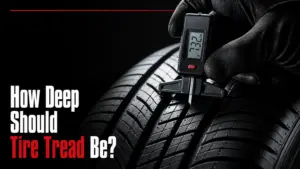
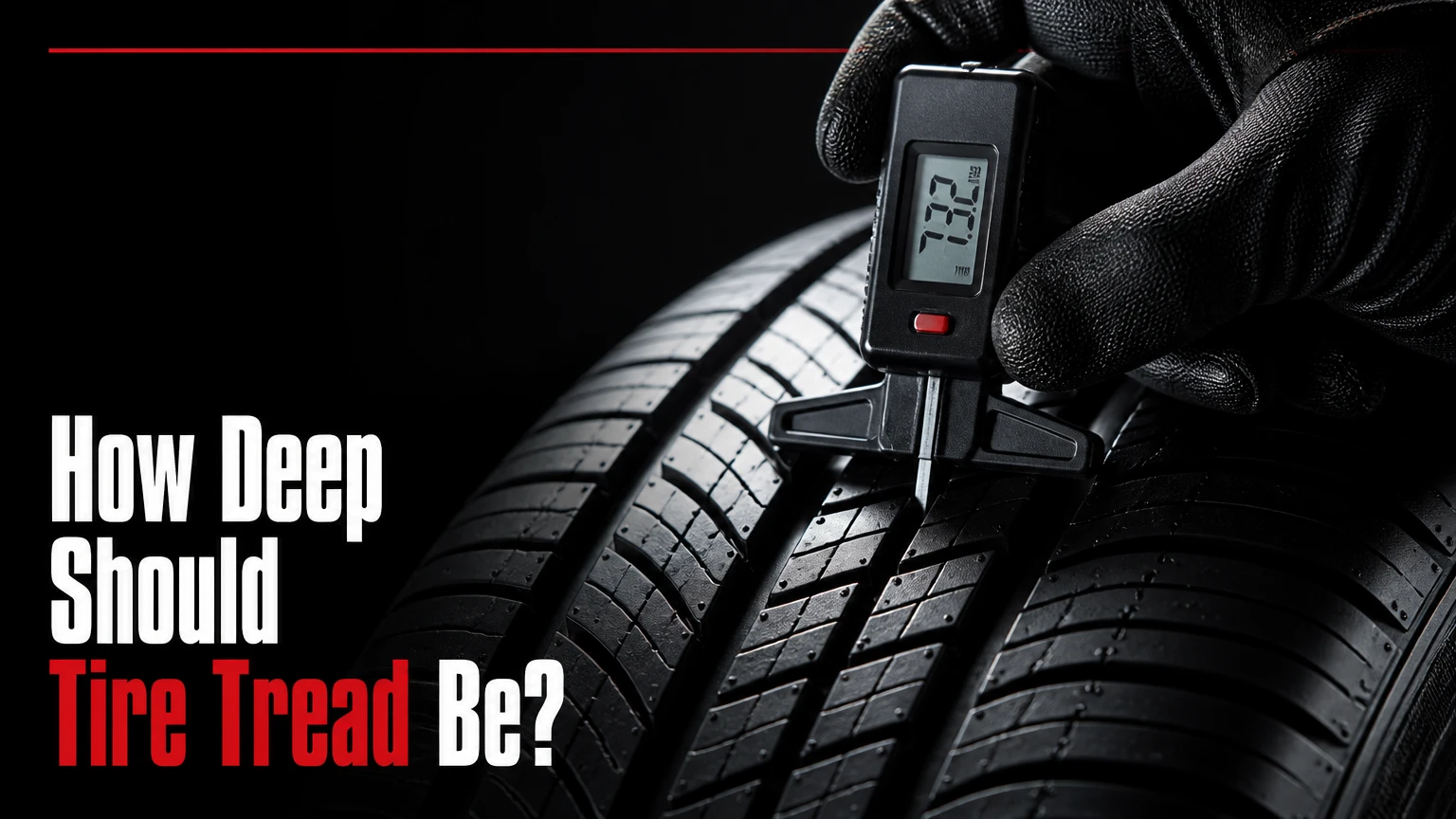
To measure tread correctly with a professional gauge, you must press the base of the tool flat against the outer surface of the tire and push the measuring pin deep into the main groove. You should perform this action in multiple locations across the face of the tire to account for uneven wear patterns.
- Park your vehicle on a flat surface and turn the steering wheel completely to one side to expose the full width of the front tire.
- Locate the main circumferential grooves running around the center of the tire.
- Push the measuring pin of the gauge fully inward so it extends past the base.
- Insert the pin into the deepest part of the groove. Avoid placing the pin directly on top of the raised wear indicator bars.
- Press the flat shoulders of the gauge firmly against the top of the rubber blocks on either side of the groove.
- Read the measurement indicated on the sliding scale or digital display.
- Repeat this process on the outer edge, the center, and the inner edge of the tire. Record the lowest number.
How do the penny and quarter tests work?
The penny and quarter tests are simple visual field tests that use common coins to estimate remaining tread depth. Insert a coin into a main tread groove with the president’s head upside down and facing you. The amount of the head covered by the rubber block indicates the general depth.
The Quarter Test measures for the 4/32 of an inch warning threshold. Place a US quarter upside down into the groove. If the top of George Washington’s head is flush with the tire tread, you have exactly 4/32 of an inch of rubber remaining. If you can see the empty space above his head, your tires have fallen below the safe rain threshold. The Penny Test measures for the 2/32 of an inch legal minimum limit. Insert a US penny upside down into the same groove. If the rubber covers the top of Abraham Lincoln’s head, you have more than 2/32 of an inch. If Lincoln’s entire head is visible, the tire is legally bald.
What are tread wear indicator bars?
Tread wear indicator bars are small raised blocks of solid rubber molded directly into the bottom of the main longitudinal grooves. Tire manufacturers position these bars evenly around the circumference of the tire. They sit exactly 2/32 of an inch above the base of the groove.
You can locate these bars by examining the upper sidewall of your tire. Look for a small triangle emblem, an arrow, or the letters “TWI” stamped into the shoulder rubber. Follow an imaginary line from that mark straight across the tread face to find the indicator bar inside the groove. When the tire is new, the indicator bar sits deep below the surface of the main tread blocks. As the friction of driving wears the tire down, the main blocks slowly become shorter. When the main tread blocks become completely flush and level with the indicator bars, the tire has reached the legal limit of 2/32 of an inch.
How much does a tread measurement tool cost?
A tread measurement tool costs between two dollars for a basic manual gauge and thirty dollars for a precision digital instrument. These tools are available at automotive parts stores, hardware shops, and online retailers. Manual slider gauges provide the most durable and cost-effective option for everyday drivers.
Manual gauges use a simple plastic or metal plunger marked with measurements in both 32nds of an inch and millimeters. They require no batteries and fit easily in a glove compartment. Digital gauges use an electronic depth probe and an LCD screen to provide highly specific decimal readings. While digital units offer faster readouts, they require battery replacements and can suffer damage if dropped on a concrete garage floor. Laser measurement scanners represent the most expensive tier. Mechanics slide these computerized units across the tire surface to generate a three-dimensional topographic map of the entire contact patch.
| Tool Type | Average Cost Range | Power Source | Best Used For |
|---|---|---|---|
| Manual Plunger Gauge | $2 to $6 | None | Routine monthly checks at home. |
| Digital Depth Gauge | $10 to $18 | Button Cell Battery | Fast reading in poorly lit garages. |
| Dial Indicator Gauge | $15 to $25 | None | Professional precision without batteries. |
| Handheld Laser Scanner | $150 to $300 | Rechargeable Battery | Dealership and fleet inspection bays. |
How many miles does a standard set of tires last?
A standard set of all-season passenger tires lasts between 40,000 and 60,000 miles under normal driving conditions. High-performance summer tires use softer, stickier rubber compounds and typically wear out in 20,000 to 30,000 miles. Harder touring tires designed for long highway commutes can last up to 80,000 miles.
Tread life varies significantly based on driving habits, road surfaces, and vehicle maintenance. Aggressive acceleration and heavy braking sheer small particles of rubber off the tire, accelerating the wear rate. Keeping tires properly inflated represents the single most effective way to maximize mileage. Under-inflated tires place excessive weight on the outer shoulders, destroying the edges prematurely. Over-inflated tires bulge slightly in the center, causing rapid center wear. Regular rotation every 5,000 to 7,000 miles ensures that the front tires (which handle steering and the majority of braking weight) share the friction load equally with the rear tires.
What is the minimum depth requirement for winter tires?
Winter and snow tires require a minimum tread depth of 6/32 of an inch to function safely in deep snow. While the legal driving limit remains 2/32 of an inch for highway use, a winter tire loses its specific snow-gripping capabilities well before it reaches the legal threshold.
Standard all-season tires grip dry asphalt through surface friction. Winter tires operate on a completely different mechanical principle. The deep voids in a winter tire are designed to trap and compress loose snow. Snow binds tightly to other snow. The trapped snow inside the grooves adheres to the snow on the road surface, creating forward traction. The US Tire Manufacturers Association (2022) notes that winter performance degrades sharply below 6/32 of an inch because the grooves become too shallow to hold enough compressed snow. To warn drivers, many winter tires feature a secondary set of wear bars molded at 6/32 of an inch known as the “snow platform.”
What are the tread rules for trucks and commercial vehicles?
New light truck and SUV tires start with a deeper tread pattern than passenger cars, typically ranging from 13/32 to 15/32 of an inch. Dedicated mud-terrain off-road tires can start as deep as 20/32 of an inch. Heavy commercial vehicles operate under strict regulatory standards that differentiate between the front and rear axles.
Commercial truck tires must support massive weight loads while steering semi-trailers. The Department of Transportation (DOT) mandates that commercial steer tires located on the front axle must maintain a minimum tread depth of 4/32 of an inch. The drive tires on the rear of the tractor and the trailer tires must maintain at least 2/32 of an inch. For consumer SUVs and off-road vehicles, mud-terrain tires lose their ability to clear rocks and thick mud long before reaching legal minimums. Off-road enthusiasts generally consider a mud-terrain tire completely ineffective off pavement once it wears below 5/32 of an inch.
| Vehicle / Tire Type | Starting Depth | Minimum Functional Depth | Legal Minimum |
|---|---|---|---|
| Standard Passenger Car | 10/32″ to 12/32″ | 4/32″ (Rain) | 2/32″ |
| Highway Light Truck (LT) | 13/32″ to 15/32″ | 4/32″ (Rain) | 2/32″ |
| Mud-Terrain Off-Road | 18/32″ to 20/32″ | 5/32″ (Mud Clearing) | 2/32″ |
| Commercial Steer Axle | 18/32″ to 22/32″ | 4/32″ (DOT Mandate) | 4/32″ |
Do electric vehicles wear down tread faster than gas cars?
Electric vehicles (EVs) wear down tire tread roughly 20 percent faster than comparable internal combustion engine vehicles. This accelerated wear rate stems from the unique physics of electric drivetrains, specifically vehicle weight and instant torque delivery.
Electric vehicles carry massive lithium-ion battery packs that add hundreds or thousands of pounds to the curb weight of the vehicle. This extra mass presses the tires harder into the asphalt, increasing the basic friction load. Additionally, electric motors deliver maximum torque instantly the moment the driver presses the accelerator. Gas engines require time to build RPMs before reaching peak power. According to a 2023 technical bulletin from Michelin Engineering, this instant twisting force creates high-intensity shear stress between the rubber blocks and the road surface. Drivers who aggressively launch their electric vehicles from stoplights can wear through a new set of tires in under 15,000 miles.
How does uneven wear alter your depth readings?
Uneven wear alters depth readings by creating false impressions of tire health. Taking a single measurement at the center of the tire might yield a healthy 6/32 of an inch reading. However, a misaligned suspension could simultaneously wear the inside shoulder of that exact same tire down to the exposed steel belts.
Tire tread must be measured across the entire width of the contact patch. Camber misalignment causes the tire to lean inward or outward, placing all the vehicle weight on a narrow strip of rubber along one edge. Toe misalignment drags the tire sideways down the road, creating a jagged pattern known as feathering. Bad shock absorbers cause the tire to bounce violently at highway speeds, removing chunks of rubber in a scalloped pattern called cupping. If any single continuous groove on the tire measures below 2/32 of an inch, the entire tire is legally defective and requires replacement regardless of the measurements in the other grooves.
Can a tire fail if the tread depth is still good?
A tire can suffer catastrophic structural failure even with a perfect tread depth of 10/32 of an inch. Rubber is an organic compound that degrades steadily over time. Environmental factors break down the chemical bonds in the rubber long before friction wears away the physical grooves.
Ultraviolet radiation from sunlight and atmospheric oxygen cause tires to become brittle. This process, known as dry rot, creates deep surface cracks along the sidewall and within the tread grooves. A brittle tire cannot flex to absorb impacts and will often blow out at highway speeds. The tire industry standard dictates replacing any tire that is six to ten years old, regardless of remaining depth. Drivers locate the age of the tire by reading the DOT code stamped on the sidewall. The last four digits indicate the week and year of manufacture. Pothole strikes and curb impacts also ruin deep-tread tires instantly by severing the internal nylon cords, resulting in a visible sidewall bubble.
Should you replace tires in pairs or all four at once?
You must replace all four tires simultaneously if you drive an all-wheel-drive (AWD) or four-wheel-drive (4WD) vehicle. You can safely replace tires in pairs if you drive a front-wheel-drive (FWD) or rear-wheel-drive (RWD) vehicle, provided the remaining two tires have adequate depth.
All-wheel-drive systems connect the front and rear axles using complex center differentials and transfer cases. A heavily worn tire has a smaller overall physical diameter than a brand-new tire. Because the worn tire is smaller, it must rotate more times per mile to keep up with the larger new tires. This constant difference in rotational speed forces the mechanical gears in the AWD system to work continuously to compensate for the slip. Operating an AWD vehicle with mismatched tire circumferences will rapidly overheat and destroy the drivetrain components. The cost of replacing a ruined transfer case far exceeds the cost of purchasing two additional tires.
Where do you install two new replacement tires?
You must always install two new replacement tires on the rear axle of the vehicle. This rule applies universally, regardless of whether the vehicle uses a front-wheel-drive, rear-wheel-drive, or all-wheel-drive layout.
Many drivers assume new tires belong on the front axle to handle steering and primary braking. This is a dangerous misconception. If the front tires lose grip in heavy rain and hydroplane, the vehicle will understeer. Understeer causes the car to plow straight ahead. The driver can safely recover by simply easing off the accelerator. If the rear tires lose grip first because they have shallower tread, the vehicle will oversteer. Oversteer causes the back end of the vehicle to swing out uncontrollably, resulting in a violent spin or fishtail. Placing the deepest tread on the rear axle ensures the back of the car stays firmly anchored to the pavement during sudden wet-weather turns.
The Bottom Line
Monitoring tire tread depth is the single most important maintenance task for wet-weather safety. Standard passenger tires demand replacement when the remaining rubber reaches 4/32 of an inch, as hydroplaning risk surges below this point. Relying on the 2/32 legal minimum leaves drivers vulnerable to dangerously long stopping distances. Drivers must measure across the entire width of the tire to catch alignment issues early and remember that age or sidewall damage will ruin a tire long before the tread wears away.