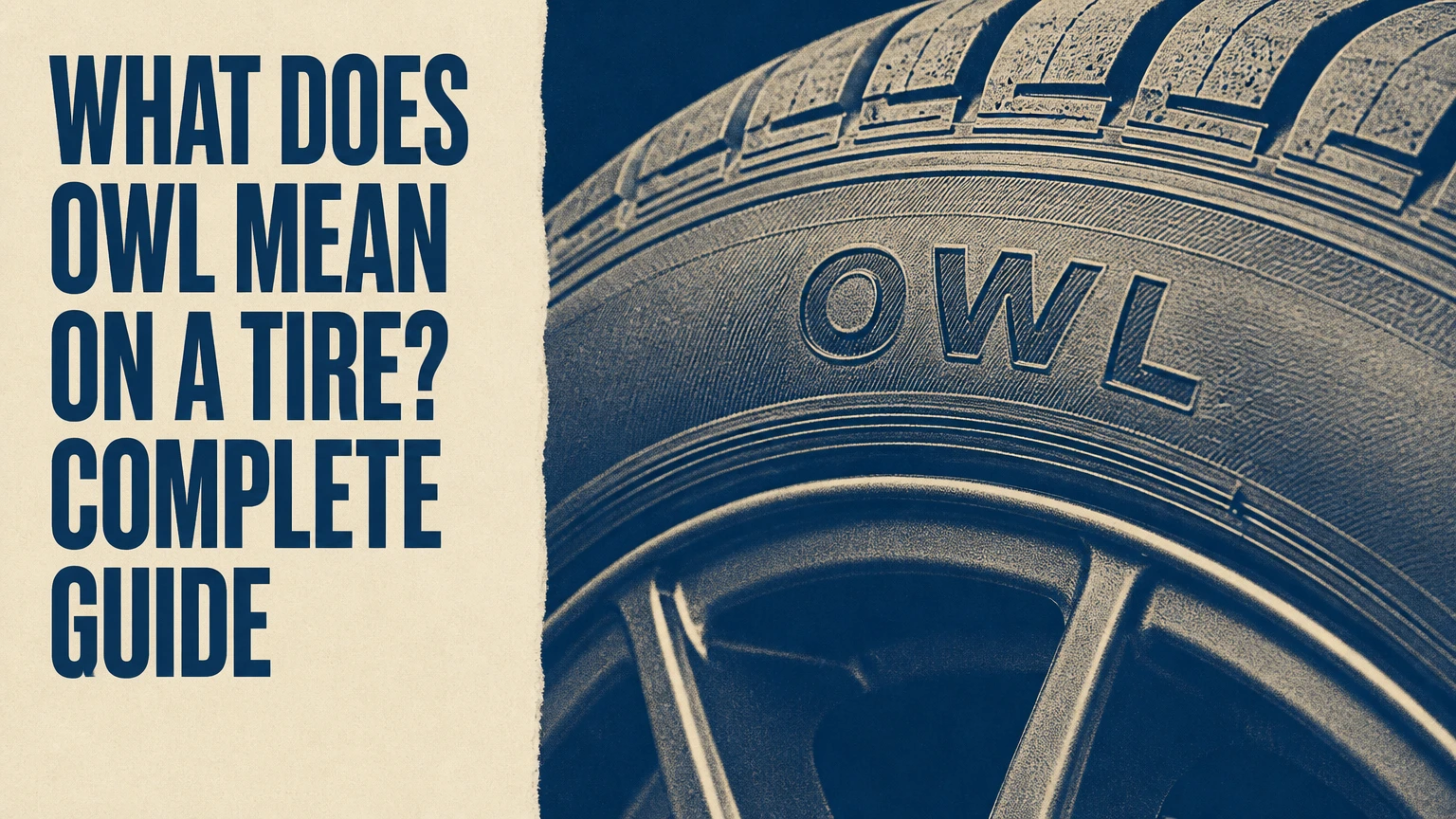
When buyers ask what does owl mean on a tire, the answer refers directly to Outline White Letters. This acronym indicates a cosmetic sidewall design option primarily found on all-terrain, truck, and SUV tires where the manufacturer name and tire model are embossed in black rubber but highlighted with a distinct white rubber border. The specification identifies a specific manufacturing technique that alters the tire appearance without changing its structural capabilities.
Key Facts / At a Glance
- OWL indicates an unfilled white perimeter surrounding the raised black sidewall lettering on a tire.
- The white outline is a permanent layer of pigmented rubber embedded deeply into the tire casing during manufacturing.
- Tire performance, speed ratings, load capacities, and weather ratings remain completely identical to black sidewall equivalents.
- Outline white letter tires typically weigh 0.5 to 2.0 pounds more per unit than standard black sidewall versions.
- Manufacturers build most outline white letter tires with a reversible design to allow drivers a solid black appearance option.
- Factory outline white letter tires carry a retail price premium of $5 to $15 per tire compared to standard models.
What Does OWL Mean on a Tire Spec Sheet?
OWL specifies the visual styling of the tire sidewall on a manufacturer specification sheet or retail product listing. You will typically see this acronym placed at the very end of a tire size sequence, reading as LT265/70R17 113S OWL. The letters inform the installer and the buyer that the exterior facing wall contains specialized white rubber borders around the branding text. It differentiates the product from identical tire models built with solid black lettering.
Automotive engineers assign these codes to manage inventory for specific vehicle aesthetic packages. Dealerships ordering replacement parts use the OWL designation to match the exact appearance of a truck leaving the factory assembly line. A specification sheet containing this code guarantees the customer receives the dual-color sidewall rather than a monotone replacement.
How Are Outline White Letters Manufactured?
Outline white letters are manufactured through a precise multi-layer vulcanization process rather than a simple surface painting technique. Factories produce these tires by embedding a specialized, UV-resistant white rubber compound strip underneath the final outer layer of black rubber during initial assembly. The process requires specific material science formulations. Engineers use titanium dioxide to create the bright white pigment and blend it with halobutyl rubber to resist ozone degradation and maintain flexibility under heavy loads.
Once the raw materials are layered, the entire tire enters a curing mold heated to over 300 degrees Fahrenheit. The intense heat and pressure stamp out the raised lettering profile into the sidewall structure. The tire emerges from the mold completely black, hiding the white rubber strip just below the surface. Factory finishing machines then use high-speed abrasive wheels to buff away a microscopic top layer of black rubber exclusively along the edges of the raised letters.
The buffing process reveals the underlying white rubber ring to create a permanent, crisp outline. This integration means the white lettering cannot wash away or peel off like aftermarket tire paint. The colored compound remains an integral part of the tire casing for the entire legal tread life of the product.
Which Sidewall Option Should You Choose?
Drivers should choose their sidewall option based on vehicle type, maintenance tolerance, and driving environments. Tire manufacturers typically offer three primary styling variations for light truck and SUV tires. Comparing these options requires understanding how the physical structure dictates long-term appearance and daily upkeep.
Most tires featuring outline white letters function as reversible components. They feature the white outlines on one side and a standard black wall on the opposite face. This allows consumers to purchase one tire model and decide the aesthetic direction during the physical mounting process at the tire shop.
Sidewall Styling Options Comparison
| Sidewall Designation | Acronym | Visual Description | Ideal Vehicle Application |
|---|---|---|---|
| Outline White Letters | OWL | Thin white rubber border surrounding hollow-looking black center letters. | Modern trucks, contemporary SUVs, and mild all-terrain builds. |
| Raised White Letters | RWL | Solid block lettering completely filled with thick white rubber compound. | Classic muscle cars, vintage 4×4 restorations, heavy off-roaders. |
| Black Sidewall | BSW | Standard solid black letters blending seamlessly into the main tire face. | Low-profile passenger cars, sleek daily drivers, low-maintenance rigs. |
| White Sidewall | WSW | Continuous thick white rubber band running the entire circumference. | Antique vehicles, specific classic luxury sedans, custom lowriders. |
Expert Recommendations Based on User Profiles
Different driving habits require specific sidewall choices to maximize visual appeal and minimize frustration. Tire aesthetics degrade rapidly if the owner selects a style incompatible with their daily environment.
The Low-Maintenance Commuter Choose the Black Sidewall option or mount the reversible tires with the black side facing outward. Commuters dealing with heavy brake dust and limited time for vehicle detailing will find white letters quickly look dirty, yellowed, and unappealing. Solid black rubber requires zero specialized scrubbing to maintain a clean appearance.
The Truck and SUV Enthusiast Choose the Outline White Letters facing outward. The thin white outlines pair beautifully with chunky all-terrain tread patterns and custom aftermarket wheels. The subtle contrast offers a rugged automotive look without appearing overly loud or vintage.
The Classic Car Restorer Choose Raised White Letters or White Sidewalls. Vintage automotive builds demand thick, solid block lettering to look period-accurate and authentic. Thin outlines look out of place on a restored 1970s muscle car or a vintage short-bed pickup truck.
The Hardcore Off-Roader Choose the Black Sidewall option. Constant rock crawling, deep mudding, and running tires at low air pressures will quickly scratch, gouge, and permanently stain white lettering. Severe off-road environments turn white rubber maintenance into a highly frustrating and repetitive chore.
Do OWL Tires Cost More or Weigh More?
OWL tires cost exactly $5 to $15 more per unit than identical black-wall configurations at the retail level. This price premium directly reflects the additional manufacturing expenses associated with the multi-step molding process, the titanium dioxide materials, and the precision factory buffing. The price difference remains relatively small, but it adds up to a $20 to $60 total premium for a complete set of four tires.
These tires weigh slightly more due to the dense layer of colored rubber compound embedded in the sidewall structure. A typical outline white letter tire weighs 0.5 to 2.0 pounds more than its solid black counterpart in the exact same size. This minor increase in unsprung weight does not tangibly alter vehicle suspension harmonics or fuel efficiency on heavy trucks, but engineers strictly account for it during factory platform testing.
Specification Impact of Sidewall Design
| Specification Metric | Outline White Letters | Black Sidewall Equivalents | Percentage Variance |
|---|---|---|---|
| Retail Price Premium | $245.00 average per tire | $235.00 average per tire | 4.2% increase |
| Unsprung Weight | 52.5 pounds per tire | 51.0 pounds per tire | 2.9% increase |
| Treadwear Mileage | 50,000 miles guaranteed | 50,000 miles guaranteed | 0.0% variance |
| Fuel Economy Rating | 18.0 miles per gallon | 18.0 miles per gallon | 0.0% variance |
Despite the weight and cost variations, outline white letters offer a 0% performance delta regarding traction and safety. A 2022 tire industry analysis of all-terrain light truck tires confirmed that styling options deliver exactly the same wet grip, treadwear life, structural load capacity, and highway noise ratings. The aesthetic addition does not compromise the physical integrity of the tire carcass.
How Do You Clean and Maintain OWL Tires?
You maintain outline white letter tires by utilizing a dedicated chemical cleaner and a stiff-bristled brush to remove embedded road grime and antiozonant staining. Factory tires ship with a blue water-soluble protectant film applied heavily over the letters to prevent oil staining from carbon black migration during transport. Installers or owners must remove this blue layer immediately using warm water and a mild detergent.
Once the tires enter daily service, the white rubber requires dedicated detailing every two to four weeks. Standard car wash soap lacks the chemical strength to penetrate the porous white rubber and lift heavy brake dust.
Step-by-Step Maintenance Process
Cleaning white tire lettering requires specific physical actions and chemical applications to prevent permanent discoloration. Follow these exact steps to restore the bright white contrast.
- Rinse the Surface: Spray down the entire tire face with pressurized clean water to remove loose mud, heavy dirt, and surface grit.
- Apply Chemical Cleaner: Spray a dedicated alkaline rubber cleaner or a mild bleach-based tire cleaner directly onto the white lettering. Avoid acidic wheel cleaners that can degrade the surrounding black rubber compounds over time.
- Scrub the Letters: Use a stiff-bristled nylon tire brush to scrub the letters firmly in a tight circular motion. You will know it worked when the white foam turns brown as it pulls out embedded road grime.
- Treat Stubborn Stains: Scrub yellowed or browned letters gently using a wet SOS steel wool soap pad. The extremely fine abrasive removes a microscopic layer of stained rubber to expose fresh white compound underneath.
- Rinse and Protect: Thoroughly rinse the tire face with high-pressure water. Apply a water-based satin tire dressing to protect the rubber against future UV damage and cracking.
Required Maintenance Materials
| Cleaning Tool or Product | Recommended Chemical Base | Application Method | Risk Factor |
|---|---|---|---|
| Tire Cleaner Spray | Alkaline or mild bleach formula | Direct spray and soak for 60 seconds | High acidity can dry out sidewalls |
| Scrub Brush | Stiff nylon bristles | Firm circular manual agitation | Wire bristles will destroy the rubber |
| Heavy Stain Remover | Fine steel wool soap pad | Gentle targeted friction on letters | Heavy pressure causes gouging |
| Tire Dressing Protectant | Water-based polymer emulsion | Wipe on with a microfiber applicator | Silicone causes permanent browning |
What Are Common Outline White Letter Mistakes?
Drivers commonly ruin outline white letters by applying high-gloss silicone tire dressings. Silicone-based chemical shines pull dark protective oils from the surrounding black rubber directly into the porous white letters. This chemical reaction causes permanent browning that no amount of scrubbing can reverse. Stick exclusively to water-based matte or satin tire protectants to seal the rubber without triggering oil migration.
Mounting the tires backward remains another frequent frustration at the installation shop. Mechanics occasionally mount tires with the black side facing out when the customer explicitly wanted the white side showing. Always verify your preference in writing with the service advisor before handing over the keys. If the technician installs them incorrectly, the tire must be fully unmounted from the wheel, flipped physically, and completely re-balanced on a machine. This correction process takes roughly 45 minutes and costs tire shops valuable labor time.
Trail scuffing creates severe visual defects for off-road drivers. Scraping sidewalls against sharp rocks or concrete curbs peels back the thin black overlay covering the core white layer. This damage creates an irregular, jagged white smear across the black sidewall. If a severe scuff occurs, carefully trim away the loose sliver of hanging rubber with a sharp utility knife. Use a dedicated black tire marker or specialized rubber paint to cover up the unwanted exposed white sections.
Professional automotive detailers share a specific practitioner rule of thumb regarding tire aesthetics. They advise owners to avoid attempting to paint black sidewall tires white using aftermarket pens. Aftermarket liquid paint sits entirely on the surface of a flexible casing that deflects thousands of times per mile. The aftermarket paint cracks, flakes, and turns yellow within 500 miles of driving, resulting in a terrible appearance that requires chemical stripping to remove. True outline white letters must be embedded chemically at the factory.
Conclusion
Understanding what does owl mean on a tire allows truck and SUV owners to make informed aesthetic decisions without compromising vehicle performance. The Outline White Letters designation guarantees a factory-embedded styling element that delivers robust durability when maintained with the proper water-based chemicals and abrasive techniques. While they require more physical upkeep and carry a minor price premium compared to standard black sidewalls, they provide a classic, rugged contrast that enhances the visual profile of modern off-road vehicles.
Frequently Asked Questions
Can you make BSW tires OWL? You cannot safely or permanently convert Black Sidewall tires into Outline White Letter tires. Aftermarket white rubber pens and paints exist, but they flake off rapidly because they cannot bond mechanically to the flexing tire surface. True outline letters require factory vulcanization to survive road friction.
How long do OWL tires last? The white rubber outline lasts the entire legal tread life of the tire, which typically spans 40,000 to 70,000 miles. Because the white compound is embedded deeply into the core casing structure rather than painted on the surface, it will not wear away under normal driving conditions.
Does flipping OWL tires to the black side cause damage? Flipping reversible tires to hide the white letters causes absolutely no structural damage. Tire manufacturers design these specific casings to rotate safely in either direction. The structural steel belts and the synthetic tread compounds perform identically regardless of which sidewall faces the street.
Why do my outline white letters keep turning brown? White tire letters turn brown due to antiozonant blooming. Tire manufacturers blend chemical antiozonants into the black rubber to prevent ozone cracking. When the tire heats up during driving, these dark protective oils migrate to the surface and bleed into the porous white rubber outline.
Do you need to rebalance a tire if you flip the white letters inside? You must completely rebalance the wheel assembly anytime a technician breaks the tire bead and dismounts the casing from the rim. Flipping the tire physically shifts the internal weight distribution relative to the metal wheel, requiring new lead or zinc weights to ensure smooth highway driving.