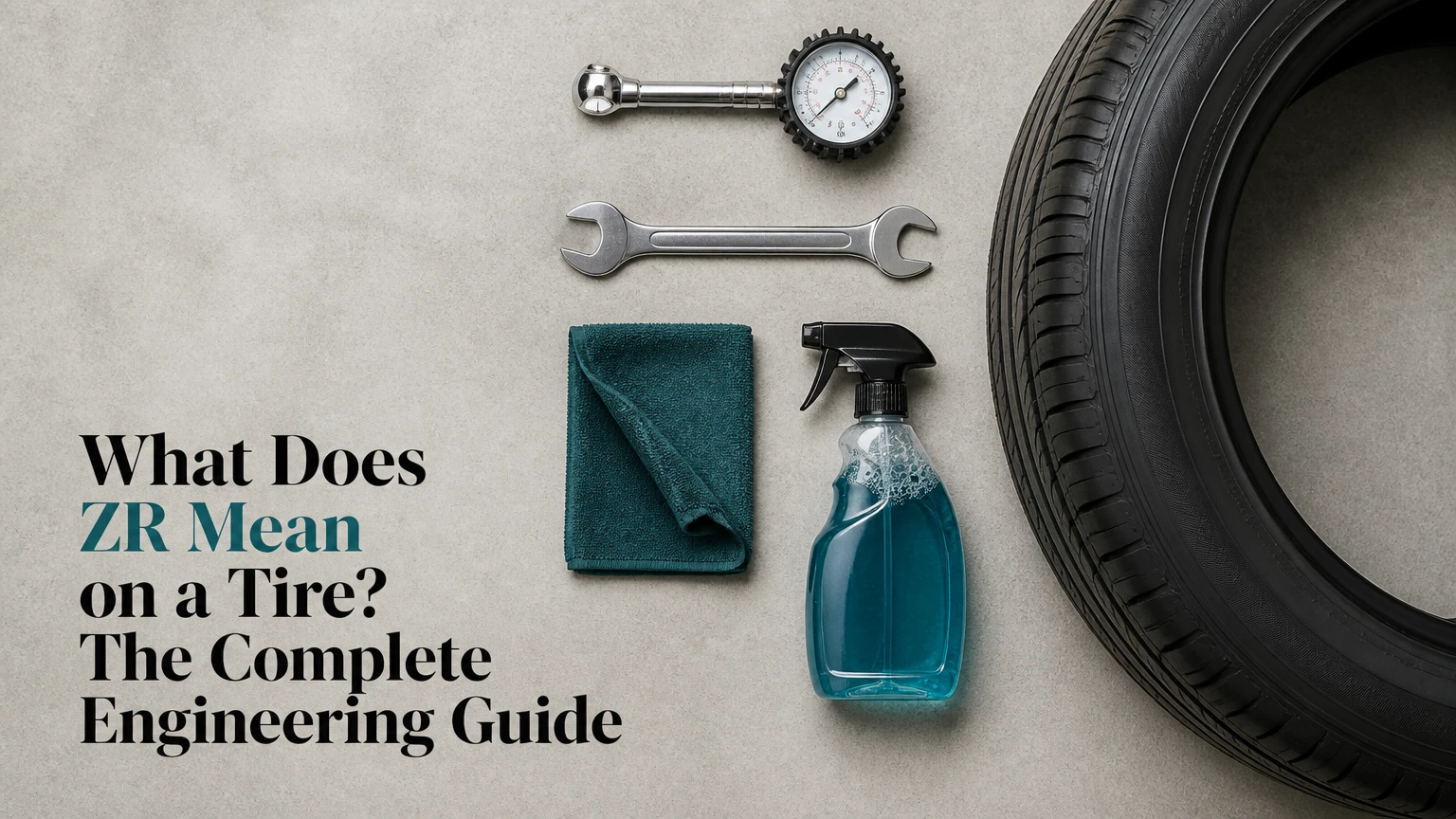
When inspecting high-performance vehicle equipment, you might ask what does zr mean on a tire. On a tire, the alphanumeric “ZR” designation indicates the structural carcass is engineered to withstand operating speeds exceeding 149 mph (240 km/h). Modern automotive regulations require this historical structural marker to appear alongside a precise maximum speed rating.
Key Facts At a Glance
- The “ZR” code combines the historical “Z” speed ceiling with “R” for standard radial internal construction.
- Tires bearing this mark undergo specialized reinforcement to prevent centrifugal expansion at high rotational velocities.
- Modern sizing regulations mandate that a ZR mark must pair with a definitive Service Description, typically W, Y, or (Y).
- High-silica rubber compounds used in these designs optimize mechanical grip but reduce typical lifespans to a 20,000-35,000 mile range.
- Replacement costs for high-speed rated rubber run between $150 and $500 per unit depending on rim diameter and compound.
The Historical Evolution of the ZR Tire Designation
Before 1990, automotive engineering rarely produced street-legal vehicles capable of exceeding 150 mph. Tire manufacturers utilized a single alphabetical system to grade maximum safe operating speeds, ending with the letter “Z” as an absolute ceiling for anything crossing the 149 mph (240 km/h) threshold. You would simply see a size like 245/40Z18.
As supercars like the Ferrari F40 and Porsche 959 pushed top speeds beyond 190 mph, a single overarching category became a severe safety liability. The European Tyre and Rim Technical Organisation (ETRTO) recognized that a tire safe at 150 mph would likely suffer catastrophic tread separation at 190 mph.
To solve this, regulatory bodies introduced precise upper-tier speed limits designated by W and Y. Instead of discarding the recognized Z code, the industry merged it with the R (radial) designation. Today, the ZR code remains printed in the tire size block to indicate a high-speed internal structure, while the exact terminal speed limit is moved to the Service Description at the end of the character string.
How Are ZR Tires Engineered Differently?
Standard passenger tires deform, expand, and generate destructive internal friction when subjected to the centrifugal forces of high-speed rotation. ZR tires utilize specific structural layers to combat these physical forces and maintain a flat contact patch against the pavement.
Reinforced Internal Steel Belts
At 150 mph, a standard tire attempts to pull itself apart. The center of the tread acts like a pizza dough spinning in the air, ballooning outward. To prevent this, engineers utilize tightly wound, high-tensile steel cords running circumferentially under the tread. These belts lock the tire’s diameter in place, preventing high-speed expansion and ensuring the tread blocks maintain even contact with the road surface.
Aramid and Nylon Cap Plies
Steel belts alone cannot fully stabilize a tire under extreme rotational stress. High-speed structures apply spiral-wrapped nylon or premium Aramid (Kevlar) layers directly over the steel belts. These cap plies act as a restrictive corset for the rubber. During high-temperature track sessions, the Aramid fibers tighten as they heat up, actively fighting the centrifugal force that attempts to distort the tire’s shape.
High-Silica Tread Compounds
Friction generates massive thermal energy. Standard rubber compounds become dangerously soft, resulting in greasy handling and sudden grip loss. Performance structures utilize advanced high-silica polymer blends engineered to dissipate thermal energy rapidly. This chemical formulation keeps the tread blocks rigid under extreme heat, preventing the tire from literally melting or shedding chunks of rubber during high-speed cornering.
Rigid Sidewall Apexes
Steering precision requires a stiff connection between the metal wheel rim and the rubber contact patch. Performance models feature reinforced apexes inside the sidewalls that resist lateral deflection. When you turn the steering wheel sharply, the stiff sidewall transfers the mechanical input directly to the tread instantly, eliminating the sluggish, rolling sensation common in standard touring tires.
How Do You Read a ZR Tire Sidewall?
Tire manufacturers print a standardized code on every sidewall to communicate precise physical dimensions and structural capabilities. Understanding what does zr mean on a tire sidewall requires reading the entire string of characters in sequence.
Consider the exact breakdown of a common performance size: 245/40ZR18 97Y
- 245 (Section Width): The tire measures exactly 245 millimeters across the widest point of its tread block.
- 40 (Aspect Ratio): The height of the rubber sidewall equals exactly 40 percent of the 245-millimeter width.
- ZR (Structural Speed Rating): The tire utilizes radial internal construction and is certified to handle speeds exceeding 149 mph.
- 18 (Wheel Diameter): The inner bead of the tire is designed to mount onto an 18-inch metal wheel rim.
- 97 (Load Index): The structural carcass can safely support a maximum static weight of 1,609 pounds (730 kilograms) per corner.
- Y (Service Description): The definitive maximum safe operating speed is hard-capped at 186 mph (300 km/h).
What Are the Specific ZR Speed Sub-Categories?
When purchasing replacements, the general ZR mark is insufficient for determining exact vehicle compatibility. You must look at the trailing alphabetical letter located immediately after the two-digit load index. The following table outlines the three primary high-speed tiers and how they compare to standard passenger equipment.
| Speed Rating Code | Maximum Certified Speed | Target Vehicle Application | Typical Compound Formulation |
| Standard (H or V) | 130 mph to 149 mph | Daily commuter sedans, compact SUVs | High-mileage touring rubber |
| ZR + W Rating | 168 mph (270 km/h) | Entry-level sports sedans, performance EVs | Ultra-High-Performance All-Season |
| ZR + Y Rating | 186 mph (300 km/h) | High-output sports cars, heavy luxury GTs | Max-Performance Summer |
| ZR + (Y) Rating | 186+ mph (Hypercar) | Exotic supercars, dedicated track vehicles | Extreme-Performance Track |
Expert Practitioner Insight: Pay close attention to the parentheses around the Y rating. A standard 97Y rating limits the vehicle to 186 mph. A (97Y) rating indicates the manufacturer physically tested and verified that specific tire for speeds exceeding 186 mph, a requirement for vehicles like the Porsche 911 Turbo or Chevrolet Corvette Z06.
Do ZR Tires Wear Out Faster Than Standard Commuter Tires?
Yes, high-speed structural ratings directly correlate with accelerated tread wear. To achieve maximum mechanical grip at high velocities, chemical engineers must formulate a softer, stickier rubber compound. Standard touring tires utilize hard carbon-black compounds designed for low rolling resistance and longevity.
Automotive technicians measure this expected lifespan using the Uniform Tire Quality Grading (UTQG) treadwear system. A standard H-rated passenger tire typically carries a UTQG rating of 600 to 800, easily lasting 60,000 miles. Conversely, a Y-rated summer performance tire typically carries a UTQG rating between 200 and 300. This softer compound provides incredible braking and cornering grip, but it physically scrubs away against the asphalt at double the rate.
| Tire Category | Average Treadwear Mileage | Typical Cost Per Unit | Primary Wear Factor |
| H/V Rated Touring | 50,000-70,000 miles | $100 to $180 | Slow, even abrasive wear |
| W-Rated UHP All-Season | 35,000-45,000 miles | $150 to $250 | Moderate abrasive wear |
| Y-Rated Summer Performance | 20,000-30,000 miles | $250 to $400 | Rapid scrubbing from soft silica |
| (Y)-Rated Track Focus | 10,000-15,000 miles | $400 to $600+ | Heat cycling and aggressive cornering |
Additionally, tire manufacturers frequently halve their standard mileage warranties for performance models. If a manufacturer offers a 50,000-mile warranty on a standard model, they will typically cap the warranty at 25,000 miles for the ZR-rated variant of the exact same tread pattern.
Are ZR Tires Suitable for Daily Driving?
Many consumers fall into the speed rating trap, assuming they do not need a high-speed tire because they never exceed local highway limits of 70 mph. However, modern vehicle chassis dynamics demand the stiff internal structure of a performance tire for basic stability, regardless of your driving speed.
Heavy modern vehicles require rigid sidewalls to safely manage weight transfer during emergency lane changes. Electric vehicles present a specific engineering challenge. A vehicle like a Tesla Model 3 Long Range produces massive instant torque and carries an incredibly heavy battery pack low in the chassis. If you downgrade from the factory ZR-rated tire to a standard H-rated touring tire, the soft touring sidewalls will fold under the heavy EV weight during basic cornering, triggering the vehicle’s traction control systems unnecessarily and ruining the steering response. If your vehicle rolled off the factory floor with ZR tires, you must replace them with the same structural rating to maintain safe handling equilibrium.
The Risks of Mixing ZR and Standard Tires
Mounting a combination of speed ratings on a single vehicle creates a dangerous imbalance in handling dynamics. Tires with different speed ratings feature entirely different sidewall stiffness levels, grip coefficients, and slip angles.
If you place stiff, high-grip ZR tires on the front axle and soft, standard V-rated tires on the rear axle, the vehicle will suffer from severe snap oversteer. During an emergency swerve, the front tires will bite into the pavement aggressively, while the softer rear tires will roll over on their sidewalls and lose traction, causing the rear end of the car to spin out. Tire industry guidelines strictly dictate that if you must mix speed ratings temporarily, the lower-speed tires must be mounted on the front axle to promote safer, more predictable understeer, though replacing all four tires simultaneously remains the only technically correct solution.
The Impact of Temperature Limits on ZR Rubber Compounds
Most top-tier high-speed tires are classified as summer-only compounds. These specialized rubber mixtures lack the chemical plasticizers required to remain flexible in freezing weather.
Expert Practitioner Insight: Performance alignment technicians strictly enforce the 45-degree rule. When ambient temperatures drop below 45°F (7°C), high-silica summer rubber undergoes a molecular glass transition phase. The compound becomes physically hard and brittle, resulting in a 60 percent loss of mechanical grip.
Driving a summer-rated performance tire in freezing temperatures acts exactly like driving on hard plastic wheels. Furthermore, if you subject these frozen tires to the heavy weight of a vehicle, the tread blocks will physically crack and chunk away from the carcass, permanently destroying the tire. If you live in a climate with cold winters, you must either swap to dedicated winter tires or purchase an Ultra-High-Performance (UHP) All-Season variant that maintains the structural speed rating while utilizing a cold-weather flexible compound.
Recognizing Common High-Performance Tire Symptoms
High-speed structural designs are hyper-sensitive to mechanical alignment and balancing errors. If your vehicle feels unstable, technicians look for specific wear patterns indicative of performance rubber failures.
| Symptom Identified | Root Structural Cause | Recommended Technical Fix |
| Steering wheel shake at 75 mph | Microscopic static weight imbalance | Hunter Road-Force balancing protocol |
| Rapid center tread wear | Over-inflation bulging the stiff cap plies | Reduce cold tire pressure to door placard specs |
| Severe inner shoulder wear | Excessive negative camber or toe-out | Perform a computerized 4-wheel laser alignment |
| Tramlining (Tracking road ruts) | Wide, rigid contact patch following grooves | Correct suspension geometry with slight toe-in |
Because the internal steel belts and Aramid cap plies are so incredibly stiff, they do not absorb minor wheel bent or weight imbalances like a soft commuter tire would. A standard spin balance is rarely sufficient for a W or Y rated tire. Automotive shops must utilize a road-force balancer, which applies a physical roller against the tread to simulate the weight of the car, detecting microscopic stiff spots in the rubber carcass before adding counterweights.
Which Tire Rating Should You Choose?
Selecting the correct structural replacement requires matching your specific vehicle chassis and climate to the correct rubber chemistry. Use this mapping guide to determine your exact requirements.
| Driver Profile | Recommended Rating | Seasonal Designation | Primary Benefit |
| Daily Commuter Sedan | H or V Rating | Grand Touring All-Season | Maximum tread life, quiet cabin, comfortable ride |
| Spirit Driver / Heavy EV | ZR + W Rating | UHP All-Season | Crisp steering response, safe in cold weather |
| Track Enthusiast | ZR + Y Rating | Max-Performance Summer | Incredible dry cornering, shortest braking distances |
| Exotic Hypercar Owner | ZR + (Y) Rating | Extreme-Performance Track | Ultimate structural integrity at triple-digit speeds |
If your daily route involves pothole-ridden city streets and you drive a standard crossover, actively avoid ZR-rated rubber unless factory required. The stiff sidewalls will transmit every bump directly into your spine and increase road noise significantly. However, if you drive a modern sports sedan or a heavy electric vehicle, investing in a W or Y rated UHP tire ensures your vehicle handles predictably, stops rapidly, and fully utilizes its engineered chassis dynamics.
Frequently Asked Questions
Are ZR tires good in the snow?
No, the structural designation has nothing to do with winter traction. Most tires carrying this high-speed mark utilize summer rubber compounds that freeze hard in cold weather. You must specifically seek out a UHP All-Season or dedicated winter compound if you expect snow.
Can I patch a punctured ZR tire safely?
You can plug and patch the rubber to hold air, but doing so instantly voids the high-speed certification. The puncture destroys the integrity of the internal steel belts and Aramid cap plies, meaning a repaired tire is no longer structurally safe for speeds exceeding 149 mph.
Is ZR a specific tire brand name?
No, it is a universal, industry-standard structural code mandated by transportation authorities worldwide. Every major manufacturer, including Michelin, Pirelli, Continental, and Goodyear, utilizes this exact same alphanumeric designation on their high-performance models.
Why are my new high-speed tires so loud on the highway?
Performance designs utilize massive, continuous rubber tread blocks on the outside shoulders to maximize dry cornering grip. These large, uninterrupted blocks trap air against the pavement, generating a low-frequency hum that soft, highly-siped touring tires avoid.
Do I have to break in new performance tires?
Yes, manufacturers coat new rubber in a chemical release agent to remove them from the curing molds. You must drive moderately for the first 500 miles to scrub off this slippery chemical layer and slightly scuff the tread surface before the compound can deliver maximum mechanical grip.
Ultimately, understanding what does zr mean on a tire protects your investment and ensures your vehicle performs exactly as the manufacturer intended. By matching the correct speed rating, load index, and compound to your specific chassis, you guarantee optimal braking distances, steering precision, and highway stability.