You can buy winter tires from independent tire shops, national tire chains, online tire warehouses, automotive service centers, and vehicle dealerships. The best choice depends on more than the tire’s advertised price: compare the complete installed cost, verified fitment, local stock, warranty handling, installation date, and whether the seller can service your wheels after purchase.
Key Facts
- Winter tires remain more flexible than all-season tires in cold conditions, generally below 7°C (45°F).
- The Three-Peak Mountain Snowflake symbol, or 3PMSF, identifies tires tested for severe snow conditions; M+S alone does not provide the same assurance.
- A vehicle should normally use four matching winter tires, including vehicles with all-wheel drive.
- Typical installed pricing ranges from about $500-$900 for a budget passenger-car set and $900-$1,800 or more for premium, large SUV, or truck applications.
- Buy during September or October when possible, because common sizes and installation appointments become less available after the first major snowfall.
- Replace winter tires at about 4/32 inch, or 3 mm, of tread for winter use, or sooner if the casing is damaged, cracked, or unevenly worn.
Where to buy winter tires
Independent tire retailers usually provide the strongest combination of fitment advice, installation, balancing, repair support, and seasonal service. Online warehouses offer the broadest inventory and sometimes the lowest tire-only prices, while dealerships are useful for original-equipment packages, leased vehicles, unusual wheel sizes, and vehicles with strict clearance requirements.
The advertised tire price is only one part of the purchase. A fair comparison includes mounting, balancing, valve stems or TPMS service, disposal fees, taxes, shipping, seasonal storage, and future rotations. An online order priced $120 below a local quote can lose that advantage after shipping and a separate installation appointment.
National chains can be convenient when they offer local stock and written road-hazard or replacement policies. Smaller shops may have less inventory, but they can often inspect suspension components, identify bent wheels, and resolve vibration complaints faster because the same technicians handle the vehicle repeatedly.
Which retailer is best for your purchase?
| Buying channel | Typical tire inventory | Typical installation timing | Best reason to choose it |
|---|---|---|---|
| Independent tire shop | 5-20 common brands and sizes | 1-7 days before peak season | Fitment advice and local service |
| National tire chain | 10-30 brands or house selections | Same day to 3 weeks | Warranty network and multiple locations |
| Online warehouse | 20-100+ brands and sizes | 3-10 days for shipping, then local appointment | Rare sizes and tire-only price comparison |
| Vehicle dealership | OEM and approved package options | 1-14 days | Lease compliance and factory-specific fitment |
| Automotive service center | 3-15 common brands and sizes | Same day to 10 days | Existing maintenance relationship |
Ask every seller five questions before paying: Is the quoted price for four tires or one? Does the quote include mounting and balancing? What is the tire’s manufacture date? Who handles a warranty claim? Can the seller confirm the wheel, load, speed, and TPMS requirements for the exact vehicle?
What makes a winter tire different?
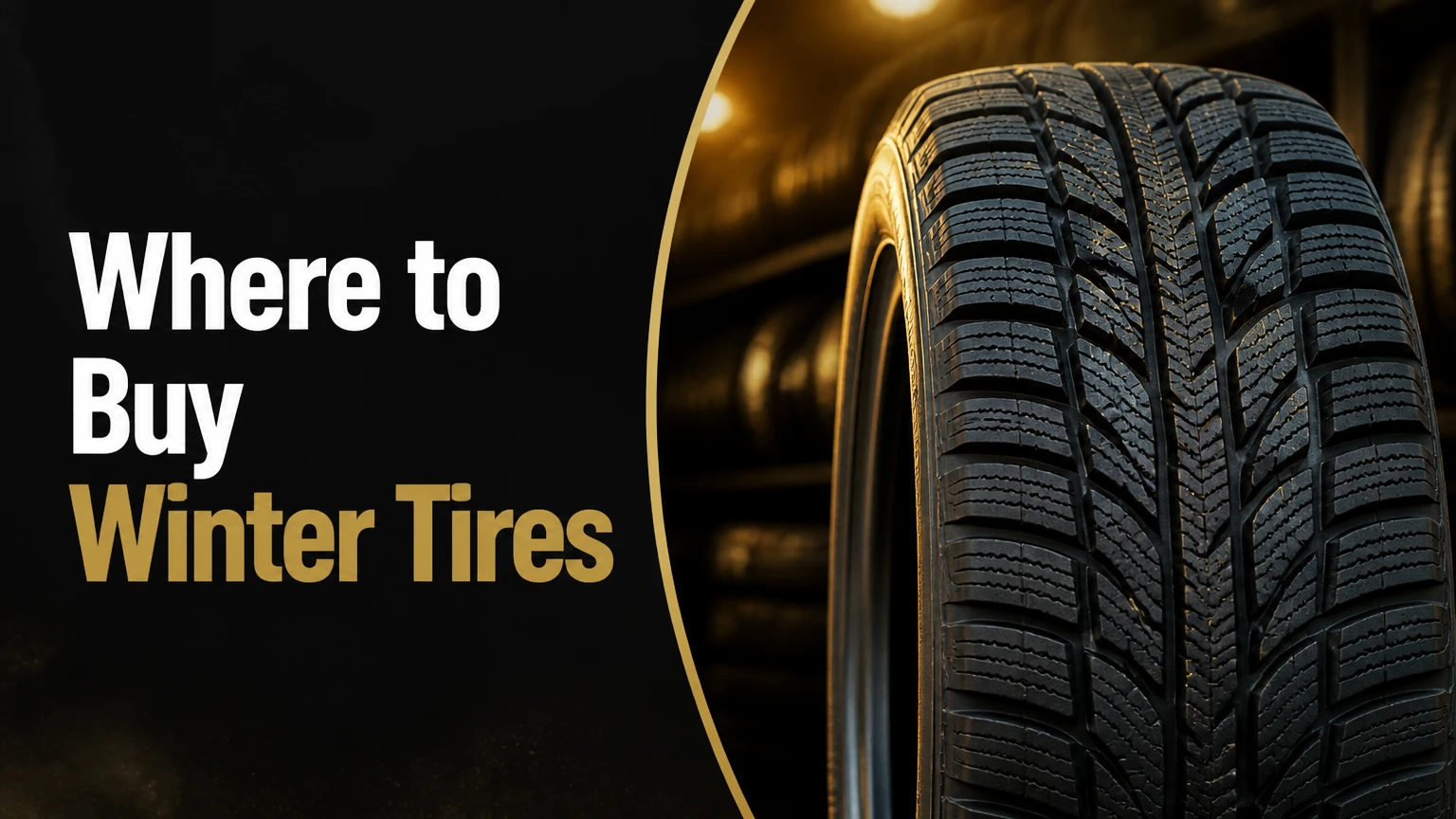
A winter tire uses a cold-weather rubber compound, high sipe density, and tread blocks designed to maintain grip on snow, ice, slush, and cold pavement. The 7°C threshold is a useful buying rule, not a physical switch: pavement temperature, precipitation, sunlight, tire condition, and driving speed also affect traction.
Dense sipes create biting edges and help evacuate water from the contact patch. Deep grooves move slush away from the tread, while flexible tread blocks deform around irregularities in ice and packed snow. Snow trapped in a winter tread can also improve snow-on-snow adhesion, which explains why a visibly aggressive tread does not automatically mean poor winter performance.
Winter tires are not designed to maximize warm-weather handling. Above roughly 7-10°C, softer compounds wear faster and may feel less precise during emergency maneuvers. NHTSA’s concise safety explanation, “Tires are the only thing between your vehicle and the road,” captures why compound condition and inflation matter as much as brand selection.
What does the 3PMSF symbol mean?
The 3PMSF symbol means a tire has passed a standardized severe-snow traction test; the marking appears as a mountain with three peaks and a snowflake. M+S indicates a tread pattern intended for mud and snow, but M+S by itself does not establish the same severe-snow test performance.
All-season tires can carry M+S markings while becoming noticeably harder in freezing weather. Some all-weather tires carry 3PMSF certification and remain installed year-round, although their winter grip, noise, and warm-weather wear may differ from a dedicated winter tire.
Check the tire sidewall and your local rules. Canadian provinces and U.S. states vary in whether winter tires, 3PMSF tires, chains, or studs satisfy a legal requirement, and studded-tire dates often differ by region.
Which winter tire type fits your roads?
Studless winter tires are the default choice for most urban and suburban drivers because they handle snow, wet slush, cold pavement, and intermittent ice without the road noise and legal restrictions associated with studs. Studded tires are more specialized, while performance winter tires trade some deep-snow ability for sharper handling on cleared, cold roads.
| Tire type | Strongest condition | Typical speed ratings | Main limitation | Suitable driver |
|---|---|---|---|---|
| Studless winter | Snow, slush, mixed ice, cold pavement | Q-T, 160-190 km/h | Less bite on polished glare ice than studs | City, suburb, mixed commute |
| Studded winter | Glare ice and frozen hardpack | Q-T, 160-190 km/h | Noise, dry-road wear, legal restrictions | Rural or mountain routes |
| Performance winter | Cold, cleared highway pavement | H-V, 210-240 km/h | Reduced deep-snow traction | Performance sedan or coupe |
| All-weather | Moderate snow with year-round use | T-V, 190-240 km/h | Usually less specialized winter grip | Mild winter, limited storage |
| All-season | Warm weather and occasional light snow | S-V, 180-240 km/h | Harder compound in sustained cold | Warm climates with rare snow |
Are studded tires worth buying?
Studded tires are worth considering when a driver regularly encounters polished ice, steep rural roads, freezing rain, or unplowed routes and local law permits their use. Studs do not transform a vehicle into an ice-proof machine; braking distance still depends on speed, visibility, vehicle mass, ABS operation, and road surface.
Studless technology has improved substantially, so many drivers gain better overall flexibility from a premium studless model. Studs can be noisy on dry pavement and may lose effectiveness as the tread wears or individual studs become damaged. Verify permitted months, road restrictions, and whether the installer can legally mount the chosen model before ordering.
When is an all-weather tire the better choice?
An all-weather tire is a practical alternative when a driver wants one set for the entire year, has moderate winter conditions, and lacks space or budget for two complete wheel sets. A 3PMSF-certified all-weather tire is materially more winter-capable than a typical M+S all-season tire, but it generally cannot match a dedicated winter tire on severe ice or deep snow.
All-weather tires also remain exposed to summer heat and dry-road mileage. Choose dedicated winter tires when winter traction is the primary safety requirement, temperatures remain low for months, or the vehicle travels through mountain passes and rural roads.
How do you choose the correct size?
Choose the vehicle manufacturer’s approved tire size, load index, speed rating, and wheel specifications from the driver-door placard and owner’s manual. A marking such as P205/55R16 identifies vehicle class, section width, aspect ratio, radial construction, and wheel diameter, but it does not provide every fitment requirement.
A replacement winter tire should meet or exceed the original load index unless the vehicle manufacturer explicitly approves another specification. The speed rating can sometimes differ for winter use, but the choice must follow the vehicle manual, local regulations, and the tire maker’s guidance.
Confirm these details before checkout:
- Size: Example, 205/55R16.
- Load index: The numeric load capacity printed after the size.
- Speed rating: The letter showing the tire’s certified speed category.
- Wheel diameter and width: Especially important when downsizing.
- Bolt pattern and offset: Required for a second wheel set.
- Brake clearance: A smaller wheel may not clear brake calipers.
- TPMS compatibility: Sensors may need programming or replacement.
- Vehicle system requirements: Some AWD and luxury vehicles require closely matched rolling diameters.
A narrower approved tire can sometimes perform better in deep snow because it cuts through loose snow rather than floating over it. Do not choose a narrower size solely from internet advice, because clearance, load capacity, wheel width, and electronic stability systems determine whether the change is safe.
How much should winter tires cost?
A typical winter tire costs about $80-$120 in budget sizes, $150-$250 in premium passenger-car sizes, and $250-$400 or more for large SUVs, trucks, performance applications, and uncommon fitments. A complete installed package commonly costs $500-$1,800 before storage, taxes, and optional steel wheels.
| Purchase component | Typical compact car | Typical midsize SUV | Typical large truck or performance vehicle |
|---|---|---|---|
| Four tires | $320-$1,000 | $500-$1,400 | $900-$1,800+ |
| Mounting and balancing | $80-$180 | $100-$220 | $120-$280 |
| TPMS service | $0-$160 | $0-$200 | $0-$240 |
| Steel or alloy wheels | $250-$700 | $400-$1,000 | $600-$1,500+ |
| Seasonal storage | $60-$160 per season | $80-$200 per season | $100-$250 per season |
Prices vary by country, tire size, brand, taxes, rebates, and shipping distance. Online listings often exclude installation, while dealership quotes may include a complete vehicle-specific wheel package. Compare four-tire totals rather than multiplying the lowest displayed tire price by four.
A dedicated wheel set can reduce seasonal labor charges and protect the original wheels from repeated bead mounting. The break-even point depends on local labor rates, wheel price, storage duration, and how many seasons the vehicle remains in use; many owners recover the added wheel cost over several seasonal changes, but not every driver does.
When should you order and install them?
Order winter tires in September or October when possible, then install them before temperatures regularly fall below 7°C (45°F) or before the first expected snow. Common sizes sell out first, and installation backlogs can extend from several days to multiple weeks after a major storm.
The best date depends on climate rather than a universal calendar date. A driver in northern Minnesota, Alberta, or Quebec may need an earlier appointment than someone in coastal British Columbia, Virginia, or southern England. Check regional stud dates and insurance requirements before installation.
If a late-season purchase is unavoidable, ask retailers to search nearby warehouses, confirm the manufacturing week, and reserve the first available appointment. Do not accept a tire with a damaged sidewall or an unusually old date code merely to obtain same-day service.
What should installation include?
Professional winter-tire installation should include mounting, balancing, inflation to the vehicle placard specification, torqueing wheel fasteners, checking tread and sidewall condition, and confirming TPMS operation. The technician should record the tire positions and explain the next rotation interval.
Ask whether the quote includes new rubber valve stems, metal-valve inspection, disposal of old tires, and a post-installation retorque. Many manufacturers recommend checking wheel torque after approximately 50-100 kilometers when wheels have been removed, especially if the installer specifies that procedure.
A complete installation check should document:
- Cold inflation pressure for all four tires.
- Tread depth in 32nds of an inch or millimeters.
- Wheel-fastener torque in the vehicle’s specified unit.
- TPMS warning-light status after driving.
- Sidewall date code and visible damage.
- Directional or asymmetric mounting orientation.
A tire shop should not repair a damaged winter tire simply because the tread looks deep. Puncture location, injury size, run-flat construction, previous repairs, and manufacturer rules determine whether repair is safe.
Why should you buy four matching tires?
Four matching winter tires give the vehicle predictable braking, steering, and cornering behavior. Installing winter tires only on the drive axle can increase the chance that the front and rear axles respond differently, creating oversteer or understeer during braking and turning.
AWD improves acceleration by distributing engine torque, but AWD does not shorten braking distance on ice. All-wheel-drive vehicles still need four winter tires with closely matched rolling characteristics, and some manufacturers specify limits for tread-depth differences between axles.
If replacing only two tires becomes unavoidable, place the tires with greater tread depth on the rear axle according to common tire-industry safety guidance, but a matched set of four remains the preferred winter configuration. Mixing studded and studless tires, or pairing different winter designs on one axle, can produce inconsistent traction.
Online versus local tire retailers
Online retailers are strongest for price discovery, rare sizes, and side-by-side specifications. Local shops are stronger for immediate fitment verification, installation accountability, balancing corrections, warranty inspections, and advice based on local road conditions.
| Decision factor | Online warehouse | Local tire shop | Dealership |
|---|---|---|---|
| Tire-only price | Often $100-$500 less per set | Usually includes service margin | Often highest |
| Size selection | 20-100+ brands and variants | 5-20 commonly stocked options | OEM-focused |
| Installation | Separate appointment required | Usually integrated | Integrated |
| Fitment support | Database or chat | Technician inspection | Vehicle-specific records |
| Warranty handling | Shipping or remote process | Local inspection | Dealer network process |
| Same-day availability | Rare after shipping | Possible if stocked | Possible for common OEM sizes |
Online buying works best when the buyer already knows the approved size and has a trusted installer willing to mount customer-supplied tires. Local buying is usually the safer default for first-time winter-tire owners, unusual wheel sizes, vehicles with TPMS complications, or drivers who need the vehicle ready within a few days.
An online retailer’s return policy deserves close inspection. Return shipping for mounted tires can be expensive, and a tire that technically matches the size may still fail to clear brakes or meet the vehicle’s load requirement.
How long should winter tires last?
Winter tires commonly last four to five seasons or approximately 30,000-40,000 kilometers when drivers maintain correct pressure, remove them during warm weather, and store them clean, dry, and away from sunlight. Mileage is only an estimate because aggressive driving, alignment problems, hot pavement, and storage conditions can shorten service life.
Replace a winter tire when tread reaches about 4/32 inch, or 3 mm, because snow traction declines before the legal minimum tread depth in many jurisdictions. Also replace tires with sidewall bulges, exposed cords, deep cuts, bead damage, persistent vibration, severe cracking, or irregular wear.
Check the four-digit date code on the sidewall. The first two digits identify the production week and the last two identify the year, so “3524” indicates manufacture during week 35 of 2024. Tire age policies differ by manufacturer, but a tire’s condition and storage history matter alongside its date.
How should you store winter tires?
Store unmounted tires upright and rotate them periodically, or stack mounted wheel-and-tire assemblies horizontally with limited height. Clean and dry the tires first, keep them in opaque bags away from ozone-producing equipment, and avoid damp outdoor storage.
Do not store tires beside electric motors, furnaces, welders, or equipment that produces ozone. Mark each tire’s position before removal, although the next installation should still use tread-depth and wear measurements to determine rotation.
What problems do winter-tire buyers encounter?
The most common buying failures involve incorrect fitment, incomplete quotes, late ordering, mixed tire types, and warm-weather use. Each problem has a practical prevention step.
- The tire fits the diameter but not the vehicle: Check load index, speed rating, wheel width, offset, and brake clearance before purchase.
- The online price is not cheaper: Add shipping, mounting, balancing, TPMS service, taxes, disposal, and a local installation charge.
- The vehicle vibrates after installation: Return to the installer for balancing, wheel inspection, torque verification, and tire uniformity checks.
- Pressure appears low in January: Measure pressure when tires are cold and adjust to the door-placard value, not the maximum molded on the sidewall.
- Winter tread wears rapidly in spring: Remove dedicated winter tires when sustained temperatures are consistently above about 7-10°C.
- The vehicle pulls or feels unstable: Check alignment, tire pressures, directional mounting, tread-depth differences, and suspension condition.
A practical rule is to measure pressure monthly and after major temperature changes. Tire pressure typically changes by roughly 1 psi for each 5-6°C change in temperature, although the exact result depends on tire volume and measurement conditions.
Which choice fits your driving situation?
Urban commuter: Choose premium studless winter tires when roads are plowed but intersections, bridges, and shaded areas freeze. Low-temperature wet grip and braking consistency matter more than maximum deep-snow clearance.
Rural or mountain driver: Choose studded tires where legal if glare ice, steep grades, and unplowed roads dominate the route. Choose an aggressive studless model when dry-road noise, legal restrictions, or long highway sections make studs impractical.
Highway performance driver: Choose performance winter tires when the vehicle travels mainly on cleared roads and the driver values steering response. Confirm that the selected tire’s speed rating and load index meet vehicle requirements.
Mild-climate occasional driver: Choose a 3PMSF all-weather tire when annual snowfall is limited, storage is difficult, and one year-round set is more practical. Dedicated winter tires remain the stronger choice for frequent snow or ice travel.
Leased or luxury-vehicle owner: Start with the dealership or a specialist familiar with the vehicle’s wheel sensors, staggered fitment, approved sizes, and lease-return requirements. An aftermarket package can work, but documentation matters.
Electric-vehicle owner: Choose a tire with the correct load capacity and verify efficiency, noise, and rolling-diameter effects. EV torque can accelerate tread wear, while battery weight increases the importance of load and pressure compliance.
FAQ
Can I buy used winter tires?
Used winter tires can be safe when they have even wear, no repairs in prohibited areas, no cracking, adequate tread, and a reasonable production date. Avoid tires with unknown storage history, mismatched pairs, exposed cords, sidewall damage, or less than 5/32 inch of usable winter tread because the apparent savings may not justify the reduced service life.
Are premium winter tires worth the extra money?
Premium winter tires are usually worth considering when the vehicle regularly encounters ice, snow, cold rain, mountain roads, or high annual mileage. Budget tires may suit occasional light snow, but compare independent test results, wet braking, ice traction, warranty terms, and tread life rather than assuming a higher price guarantees better performance.
Can I use winter tires on the original wheels?
You can use winter tires on the original wheels if the tire size and wheel specifications are approved, but repeated seasonal mounting increases labor cost and exposes wheels to bead damage. A second wheel set simplifies seasonal changes, protects expensive alloy wheels, and can make appointment scheduling easier.
Do winter tires reduce insurance costs?
Some insurers offer discounts for approved winter tires, while others do not, and eligibility often depends on tire type, installation dates, and region. Ask the insurer for its exact requirements before buying; a 3PMSF marking, four-tire installation, or approved manufacturer list may be required.
How often should winter tires be rotated?
Rotate winter tires according to the vehicle and tire manufacturer’s schedule, commonly every 8,000-12,000 kilometers when the tread pattern allows rotation. Directional tires must remain on the same side unless remounted, and staggered vehicles may require a front-to-rear-only pattern or no rotation.
Where should you buy winter tires if you need them today?
Call local independent tire shops and national chains first, then ask them to search regional inventory for the exact approved size and load rating. Same-day availability is most realistic for common 15-18-inch passenger-car sizes; large SUV, performance, EV, and uncommon sizes may require warehouse shipping.
The Bottom Line
Where to buy winter tires depends on the complete ownership package, not the lowest tire-only listing. A reputable local tire specialist is the safest default for fitment, installation, balancing, and warranty support; an online warehouse is valuable for rare sizes and price comparison when a qualified installer is already arranged. Confirm the approved size, load index, speed rating, 3PMSF status, four-tire match, total installed price, and appointment date before ordering. Buy early, inspect the date code and tread, and remove dedicated winter tires when sustained warm weather arrives.