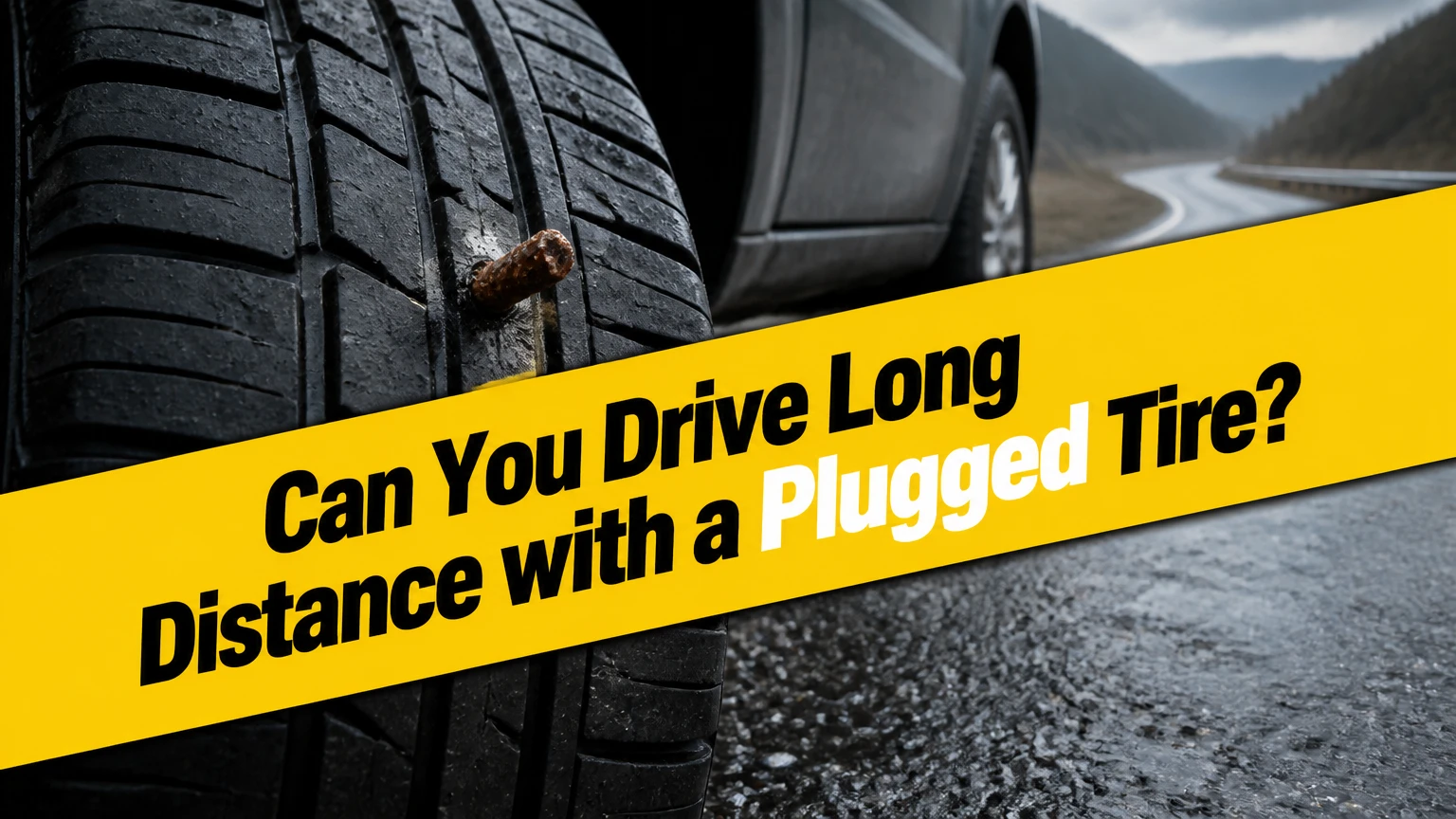
You can safely drive long distances on a plugged tire only if the puncture was repaired from the inside out using a USTMA-approved combination plug-and-patch in the central tread zone. Temporary external string plugs are restricted to emergency use under 50 miles and are unsafe for long-distance highway travel.
At a Glance: Long-Distance Tire Plug Rules
- Safe Repair Method: Only an internal combination patch-plug is approved for long-distance highway driving.
- Maximum Hole Size: Punctures must be 0.25 inches (6 mm) or smaller in diameter.
- Forbidden Zone: Repairs within 0.5 inches of the tread shoulder or on the sidewall are unrepairable.
- Speed Ceiling: Maintain speeds under 85 mph (137 km/h) on a properly patch-plugged tire.
- Temporary Plugs: External string plugs should never exceed 50 miles or 50 mph.
What Is the Difference Between an Emergency String Plug and a Professional Patch-Plug?
An emergency string plug is an external repair inserted from the outside without removing the tire from the rim, whereas a professional patch-plug is an internal repair applied from inside the tire carcass.
+--------------------------+------------------------------------+---------------------------------------+
| Feature                  | External String Plug               | Internal Combination Patch-Plug       |
+--------------------------+------------------------------------+---------------------------------------+
| Application Method       | Inserted from outside wheel        | Applied from inside after dismounting |
| Structural Rubber Seal   | None (friction & sticky cord)      | Vulcanized rubber stem + inner patch  |
| Safe Distance Limit      | Under 50 miles (Emergency only)    | Full remaining tread life             |
| Max Recommended Speed    | 50 mph (80 km/h)                   | 85 mph (137 km/h)                     |
| USTMA / DOT Compliance   | Non-compliant (Temporary)          | Fully compliant                       |
+--------------------------+------------------------------------+---------------------------------------+
An external string plug uses a sticky cord shoved into the puncture hole using a T-handle tool. It acts as an emergency stopgap to reach a repair facility. Because the tire is not unmounted, string plugs leave internal structural damage uninspected and fail to seal the inner liner. Over time, moisture seeps into the steel belts, leading to rust, belt separation, and sudden air loss at highway speeds.
A professional combination patch-plug requires unmounting the tire to inspect the inner liner for structural integrity. The mechanic drills the puncture path cleanly, fills the hole with a vulcanized rubber stem, and seals the inner liner with an adhesive patch. This dual-action repair permanently seals against air loss and prevents water from reaching internal steel belts.
What Are the Safety Limits for Driving Highway Distances on a Repaired Tire?
A repaired tire must adhere to strict manufacturing and safety thresholds set by the U.S. Tire Manufacturers Association (USTMA) to remain safe for long-distance travel.
To maintain structural integrity under continuous highway rotation, a repaired tire must satisfy all of the following parameters:
- 0.25 Inches (6 mm) Max Puncture Size: Larger holes or tears indicate severed structural steel belts that cannot safely hold a plug.
- 1.5 Inches (38 mm) Minimum Repair Separation: If two punctures occur closer than 1.5 inches apart, the tire structure is compromised and must be replaced.
- 2 Repairs Maximum Per Tire: A tire can be repaired a maximum of two times across its lifespan. A third puncture requires full tire replacement.
- 2/32″ Minimum Tread Depth: A tire with less than 2/32 of an inch (1.6 mm) remaining tread is legally worn out and must not be repaired or driven long distances.
- 85 mph Speed Ceiling: Even a properly patch-plugged tire undergoes a permanent reduction in its high-speed rating capacity. Continuous driving above 85 mph risks heat buildup and failure.
Why Can’t You Plug a Puncture Located Near the Tire Sidewall or Shoulder?
You cannot plug a puncture located within 0.5 inches of the tire shoulder or on the sidewall because this outer region undergoes extreme flex and heat accumulation during vehicle cornering.
        SAFE TREAD REPAIR ZONE vs. UNSAFE SHOULDER/SIDEWALL

  +---------------------------------------------------------------+
  |  NO-GO ZONE  |          SAFE REPAIR ZONE         | NO-GO ZONE |
  | (Outer 0.5") |      (Center 70-80% of Tread)    | (Outer 0.5")|
  +--------------+-----------------------------------+------------+
  |              |                                   |            |
  |  Sidewall    |   [Plug/Patch Allowed Here]       |  Sidewall  |
  |  Flex Area   |   Puncture <= 0.25" (6mm)         |  Flex Area |
  |              |                                   |            |
  +--------------+-----------------------------------+------------+
The outer edges of a tire tread—known as the shoulders—and the vertical sidewalls lack the internal steel belt bracing present under the central tread. During highway driving, the sidewall constantly bends, compresses, and expands with every wheel revolution.
If a plug or patch is placed in or near this flex zone, the continuous bending breaks the adhesive bond between the repair compound and the tire inner liner. This leads to sudden tread separation or sidewall blowouts at high speeds. Punctures in the outer half-inch of the tread canvas carry a zero-mile safety rating and require immediate tire replacement.
How Long Does a Tire Plug Last on Highway Trips?
A professional internal combination patch-plug lasts for the remaining lifespan of the tire tread, potentially covering 20,000 to 40,000 additional miles. An external string plug lasts between 50 and 250 miles before friction, heat, and air pressure degrade the seal.
The longevity of a repair depends directly on mechanical execution:
- Internal Vulcanized Patch-Plugs: Bond permanently with the tire’s inner liner through chemical vulcanization. They expand and contract at the same rate as the surrounding tread rubber, surviving long-distance cross-country trips without issue.
- External String Plugs: Rely entirely on friction and surface adhesive. Continuous highway rotation heats the tire carcass, softening the adhesive cord. The string eventually shrinks, dries out, and allows slow air leaks or complete blowout under sustained heat.
Can You Drive 70–80 MPH on a Highway with a Repaired Tire?
Yes, you can drive 70–80 mph on a highway with a repaired tire provided it was fixed using an internal combination patch-plug inside the safe tread zone.
If your tire was repaired using an external string plug, keep your driving speed below 50 mph and limit your route to the nearest tire service shop.
Continuous high-speed driving causes tires to flex rapidly, raising internal temperatures above 160°F (71°C). High temperatures soften external repair cords, causing them to dislodge under centrifugal force. Additionally, drivers hauling heavy loads or travelling through hot climate zones (above 100°F / 38°C ambient temperature) should reduce cruising speeds by 5 to 10 mph to reduce heat stress on repaired rubber structures.
How Does Heavy Vehicle Load and Hot Weather Affect a Repaired Tire?
Heavy vehicle loads and high ambient temperatures increase internal tire temperature and sidewall flexing, accelerating repair degradation.
When packing a vehicle full of cargo or towing a trailer, the additional weight compresses the tire carcass, widening its contact patch on the asphalt. This extra friction generates high heat within the internal rubber compound.
- Heat Effect on Vulcanizing Cement: Temperatures exceeding 180°F inside the tire carcass weaken uncured or low-grade adhesive bonds holding internal patches to the inner liner.
- Centrifugal Stress: At highway speeds, heavy rotational force pulls outward on external plugs, increasing air leak risks if the plug channel was drilled unevenly.
When carrying heavy cargo across long distances, check your tire cold-inflation pressure every morning and keep total load weight within the gross vehicle weight rating (GVWR) printed on your driver-side door jamb.
Why Does an Angled Puncture Compromise a Tire Repair?
An angled puncture compromises a tire repair because a entry angle greater than 15 to 20 degrees prevents standard patch-plug stems from sealing flush against the inner liner surface.
       STRAIGHT PUNCTURE (SAFE)              ANGLED PUNCTURE (UNSAFE)

           ||   (0-15° Angle)                      //   (>20° Angle)
     ======||====== Tread Inner Liner        ======//====== Tread Inner Liner
           ||                                     //
    Stem seals flat against liner          Stem bends; patch edge lifts
    and fills channel completely           and allows steel belt corrosion
When a nail or bolt penetrates the tread at a sharp angle, forcing a straight rubber plug stem into the opening leaves hollow voids alongside the internal steel belts. Highway rotation creates shear forces along this angled path, breaking the patch seal. Moisture and road salt then creep into the exposed steel wire plies, causing internal rust, belt delamination, and sudden structural tire failure over long journeys.
Angle-specific structural repairs require multi-piece lead-wire patch systems installed exclusively by qualified tire technicians.
Can You Drive Long Distances on a Repaired Run-Flat Tire?
No, you should not drive long distances on a repaired run-flat tire because most major tire manufacturers explicitly prohibit repairing run-flat tires after a zero-pressure event.
Run-flat tires utilize reinforced, rigid sidewall inserts that support the vehicle’s weight when air pressure is lost. Driving on a run-flat tire while it is underinflated creates massive internal friction and thermal buildup, destroying the structural integrity of these sidewall inserts. Even if the puncture hole in the tread is patched, the internal tire structure may be permanently weakened and prone to catastrophic failure on long trips.
A small selection of manufacturers permits a single repair only if the driver can verify the tire was never operated below 15 PSI.
Will a Plugged Tire Pass a State Vehicle Safety Inspection?
Yes, a repaired tire will pass an official state vehicle safety inspection provided the repair is restricted to the central tread zone, uses standard repair methodology, and holds pressure without leaks or bulging.
A tire will trigger an automatic safety inspection failure if it exhibits any of the following conditions:
- An external string plug visible in the tread canvas without an accompanying internal patch.
- Any repair located on the tire shoulder or sidewall.
- Tread depth reading below the legal threshold of 2/32 of an inch (1.6 mm).
- Visible sidewall bulges, structural bubbles, or exposed internal steel belts around the repaired zone.
Does Plugging a Tire Void the Manufacturer Warranty?
Plugging a tire voids the manufacturer warranty if the repair is performed using an external string plug or placed outside the designated safe tread zone.
Tire manufacturers back their treadwear and structural warranties only when repairs adhere strictly to USTMA guidelines. An internal combination patch-plug installed by a licensed technician inside the safe tread area preserves your remaining treadwear warranty coverage. Conversely, using a DIY string plug kit voids all road-hazard and material defect warranties on that specific tire immediately.
How Do You Test a Repaired Tire for Air Leaks Before a Long Road Trip?
You can test a repaired tire for air leaks before a trip by spraying a liquid soap solution over the repair site and inspecting it for rising air bubbles.
+------+-------------------------------------------------------------------+
| Step | Action                                                            |
+------+-------------------------------------------------------------------+
|  1   | Inflate the tire to its recommended cold PSI (printed on door).   |
|  2   | Mix 1 part dish soap with 4 parts water in a clean spray bottle.  |
|  3   | Spray the mixture generously over the plug area and valve stem.  |
|  4   | Watch closely for 2 to 3 minutes for growing micro-bubbles.       |
|  5   | Re-check PSI after 24 hours to confirm pressure retention.        |
+------+-------------------------------------------------------------------+
If growing bubbles appear, air is escaping around the repair stem. Do not start a long road trip with a leaking repair; take the wheel to a shop for complete dismounting and inspection.
What Should You Do If a Tire Plug Begins Failing on the Highway?
If a tire plug fails while driving, slow down gradually, hold the steering wheel firmly, pull over to a safe shoulder, and replace the flat tire with your spare.
- Maintain Vehicle Control: Avoid slamming on the brakes. A sudden drop in tire pressure can cause the vehicle to pull toward the side of the failing tire. Keep both hands on the wheel and ease off the accelerator pedal.
- Signal and Move Safe: Turn on your hazard lights and steer smoothly onto the right shoulder or off the nearest highway exit onto flat ground.
- Inspect and Swap: Turn off the engine, set the emergency brake, and check tire pressure. If the plug has failed, install your spare tire or call roadside assistance. Never attempt to re-plug a failing tire on an active highway shoulder.
Should You Repair or Replace a Damaged Tire Before a Multi-State Trip?
You should repair a damaged tire if the puncture is under 0.25 inches, located in the central tread, and fixable via an internal patch-plug; otherwise, replace the tire before a multi-state trip.
                          IS YOUR TIRE SAFE FOR A ROAD TRIP?
                                        |
                   Did a nail penetrate the tread area?
                                  /            \
                                YES             NO --> Replace Tire Immediately
                                 |
                 Is puncture within outer 0.5" shoulder?
                               /            \
           YES --> Replace Tire              NO
                                              |
                             Is puncture size <= 0.25" (6mm)?
                                           /            \
                       YES --> Patch-Plug Allowed       NO --> Replace Tire
Consider replacing the tire outright if:
- The tread depth is near 4/32 of an inch (approaching end-of-life).
- The tire is over 5 to 6 years old, as aging rubber compound loses flexibility and bond strength.
- You are towing high loads or travelling through high-temperature regions where tire stress peaks.
The Bottom Line
Driving long distances on a plugged tire is safe only when the puncture is 0.25 inches or smaller, located in the central tread area, and repaired from the inside using an internal combination patch-plug. External string plugs are temporary emergency measures that must not be driven at highway speeds or over long distances. Always test your repaired tire for pressure loss and confirm the repair meets USTMA guidelines before embarking on a multi-state road trip.