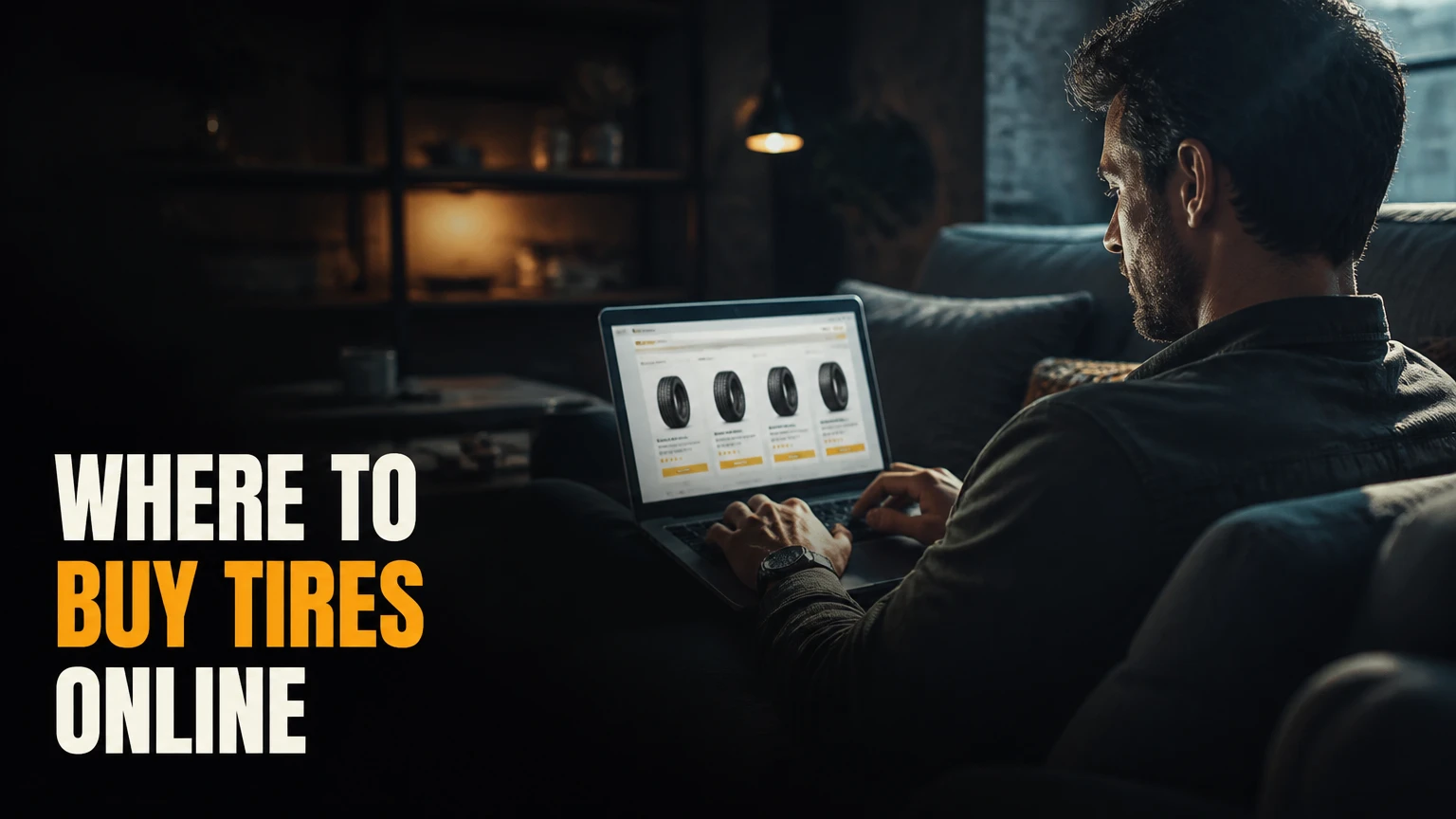
The best place to buy tires online is a retailer that verifies vehicle fitment, displays the complete installed price, provides a recent manufacturing date, and coordinates a reputable installer. Tire Rack, Discount Tire, SimpleTire, Costco, Sam’s Club, and selected local tire shops each fit different needs, so compare service, warranty, delivery, and total cost rather than tire price alone.
Key facts at a glance
- Tire Rack is strongest for technical testing data, fitment research, and broad enthusiast-oriented selection.
- Discount Tire combines online ordering with a large physical service network and generally straightforward after-sale support.
- SimpleTire and Amazon can expose lower prices, but buyers must verify load rating, speed rating, seller identity, date code, and return terms.
- A typical four-tire installation adds about $100-$240 before alignment, taxes, specialty fees, or upgraded services.
- The driver-door placard is the safest starting point for original tire size, load requirement, and cold inflation pressure.
- Tire age should be evaluated by DOT date code, storage conditions, warranty policy, and visible condition, not by an automatic universal rejection age.
Where to buy tires online
The right online tire seller depends on whether the buyer values technical research, physical service access, warehouse-club pricing, or the lowest advertised price. A retailer with a local installer usually reduces shipping risk, while direct delivery to a trusted independent shop can provide better accountability for unusual vehicles or specialty tires.
Online tire buying is an O2O, or online-to-offline, transaction. The website handles product discovery, payment, fitment filtering, and often appointment scheduling; a shop, mobile technician, or warehouse-club service center performs mounting, balancing, inflation, and disposal. The seller and installer may be separate businesses, which matters when a tire arrives damaged or a vibration appears after installation.
The strongest purchase path has four parties clearly identified: the tire brand, the selling retailer, the shipping destination, and the installer. Read the warranty and return policy before payment because some sellers require unused tires to be returned while others limit returns after shipment to an installer.
Which online retailer fits your buying situation?
| Seller or channel | Best use case | Service model | Main limitation |
|---|---|---|---|
| Tire Rack | Performance, touring, specialty fitments | Ship to network shop or home | Installation accountability may involve a third party |
| Discount Tire | Convenient physical follow-up | Online order with store installation | Selection and appointment availability vary locally |
| SimpleTire | Broad price and brand comparison | Ship to partner installer or home | Buyer must inspect seller terms and installation coverage |
| Costco | Members seeking bundled service | Warehouse installation | Membership fee and limited appointment capacity |
| Sam’s Club | Members comparing warehouse pricing | Club installation | Service availability depends on club location |
| Amazon Automotive | Familiar checkout and budget shopping | Seller or installer-dependent | Fitment, seller quality, and returns require close review |
| Independent local shop | Advice, specialty vehicles, direct accountability | Shop orders and installs | Online inventory and discounts may be narrower |
Tire Rack is particularly useful when braking, wet handling, noise, or winter performance matters because its product pages and test resources provide more technical context than a basic marketplace listing. Discount Tire is often more convenient when a buyer wants a physical location to handle rotations, puncture checks, or warranty questions.
Costco and Sam’s Club can be competitive when membership pricing, installation packages, and included maintenance offset the membership cost. Amazon is convenient, but the product page may represent a marketplace seller rather than Amazon itself, so the listing’s “sold by” and “shipped by” fields deserve attention.
How much does it cost to buy tires online?
A typical online purchase for four mainstream passenger tires costs approximately $600-$1,400 installed, while performance, truck, run-flat, winter, and EV-oriented fitments can push the total above $1,600. The correct comparison is tire price plus shipping, taxes, installation, balancing, valve service, disposal, alignment, and optional protection.
| Cost component | Typical passenger-car range | When the charge increases |
|---|---|---|
| Tire price per tire | $90-$300 | Premium brand, 19-inch size, run-flat, EV, UHP |
| Mounting and balancing | $20-$45 per tire | Large wheels, low-profile sidewalls, road-force balancing |
| Tire disposal | $3-$10 per tire | Local environmental fee or specialty tire |
| Valve or TPMS service kit | $3-$25 per wheel | Rubber valve replacement or sensor-related service |
| Shipping | $0-$40 per tire | Home delivery, rural address, expedited freight |
| Four-wheel alignment | $90-$180 | Steering pull, uneven wear, suspension work |
| Road-hazard coverage | $10-$35 per tire | Retailer or manufacturer protection plan |
Online pricing is often lower because centralized inventory and high sales volume reduce storefront overhead, but the difference is not guaranteed. A local shop may match a web price, include installation, provide free rotations, or avoid shipping and return costs. The only reliable comparison is an out-the-door quote from both channels.
For example, four $165 tires total $660 before fees. A 14% promotion would reduce that line item to $567.60, and four $28 installation charges would produce $679.60 before tax, disposal, and TPMS work. A local quote of four $195 tires with a $40 package discount and four $22 installation charges would total $728 before tax, producing a $48.40 online advantage in this specific scenario.
Promotional percentages are not universal market rules. Discount codes may exclude premium brands, warehouse-club prices may require membership, and installation packages can contain different services.
What does a complete online tire quote include?
A complete quote identifies four tires, brand and model, exact size, load index, speed rating, shipping destination, installation location, labor, balancing, disposal, taxes, warranty, and appointment terms. If one of those items is missing, the advertised price is incomplete.
Ask whether the installer includes new rubber valve stems, TPMS relearn, torque-to-spec wheel installation, free rechecks, and disposal. Ask separately about alignment. Tire installation does not automatically include alignment, and an alignment cannot correct a bent wheel or worn suspension component.
What tire specifications must match?
The replacement tire must match the vehicle’s approved size and meet or exceed the required load index and speed rating unless the vehicle manufacturer explicitly permits an alternative. The driver-door placard and owner’s manual take priority over the sidewall of an existing tire, especially after a previous modification or incorrect replacement.
A marking such as P215/55R17 94V contains several attributes:
- P identifies a passenger tire classification.
- 215 is section width in millimeters.
- 55 is aspect ratio, meaning sidewall height is 55% of width.
- R indicates radial construction.
- 17 is wheel diameter in inches.
- 94 is the load index.
- V is the speed rating.
Check whether the vehicle uses XL, or extra-load, tires, run-flat construction, a staggered front and rear setup, directional tread, or a manufacturer-specific fitment. AWD vehicles can require closely matched rolling circumference across all four positions. Replacing one tire on an AWD vehicle may be unacceptable if tread-depth differences exceed the manufacturer’s limit.
Which tire information should you verify before checkout?
| Specification | Example | Buyer’s verification |
|---|---|---|
| Tire size | 225/65R17 | Driver-door placard and owner’s manual |
| Load index | 102 | Equal to or above factory requirement |
| Speed rating | H | Equal to or above approved rating |
| Construction | XL, run-flat | Match vehicle equipment and intended use |
| Season certification | 3PMSF | Required for severe-snow performance |
| Tread warranty | 70,000 miles | Read exclusions and prorating terms |
| Manufacturing date | DOT 3425 | Week 34 of 2025, shown on full DOT code |
The sidewall on the current tire remains useful for identifying what is installed, but it does not prove that the tire is correct for the vehicle. A vehicle-specific search tool is convenient, yet the buyer should confirm the final size and rating against the placard before paying.
Which tire type should you choose?
All-season tires suit mild climates and mixed commuting, all-weather tires provide stronger severe-snow capability without seasonal swapping, winter tires maximize cold-weather grip, and all-terrain tires trade pavement quietness for gravel and trail durability. Tire category should follow temperature, precipitation, road surface, vehicle weight, and driving behavior.
| Tire category | Typical price each | Typical tread-life range | Best operating conditions |
|---|---|---|---|
| Grand touring all-season | $110-$220 | 55,000-80,000 miles | Mild winters, commuting, highway use |
| All-weather | $140-$260 | 45,000-70,000 miles | Frequent snow, changing seasons |
| Winter or snow | $120-$280 | 3-4 winter seasons | Sustained temperatures below 45°F |
| Ultra-high performance | $170-$400+ | 25,000-45,000 miles | Dry handling, wet grip, sport driving |
| All-terrain | $160-$340 | 40,000-65,000 miles | Gravel, dirt, towing, light trails |
| EV-oriented | $180-$380 | 30,000-55,000 miles | Heavy EVs, low noise, range priorities |
Grand touring all-season tires such as Michelin Defender 2 or Continental TrueContact Tour prioritize quietness, wet braking, and long wear. They are poor substitutes for dedicated winter tires in areas with persistent ice, deep snow, or temperatures well below freezing.
All-weather tires carry the Three-Peak Mountain Snowflake, or 3PMSF, symbol and are tested for severe-snow performance. They are a practical compromise for drivers who face periodic snow but do not want two wheel-and-tire sets. Dedicated winter tires remain superior in severe cold because their compounds stay more flexible.
UHP tires such as Continental ExtremeContact DWS06 Plus or Michelin Pilot Sport 4S improve cornering response, but softer compounds commonly reduce tread life and increase replacement cost. All-terrain tires add casing protection and open tread blocks, yet they can raise noise, rolling resistance, and wet-pavement stopping distance.
EV-labeled tires may use reinforced construction, low-rolling-resistance compounds, acoustic foam, or load capacity appropriate to battery weight. EV branding is not a substitute for checking the exact size, load index, speed rating, and vehicle approval.
How do you order tires online?
Ordering tires online takes about 20-40 minutes for research and checkout, followed by approximately 3-10 business days for delivery in typical U.S. conditions. Fitment verification is the factor that most determines success, because a low price has no value if the tire has the wrong size, rating, construction, or seasonal capability.
Step 1: Record the factory specifications
Open the driver-side door and photograph the certification placard. Record front and rear sizes separately if the vehicle uses staggered wheels, then note the recommended cold inflation pressure.
Success checkpoint: The online vehicle search and the placard show the same front and rear specifications.
Common mistake: Copying the size from a tire installed by a previous owner without confirming factory data.
Step 2: Set the actual driving requirements
Record annual mileage, winter temperature, snow frequency, highway percentage, towing load, gravel use, and noise sensitivity. A commuter in Phoenix and a commuter in Buffalo need different tire categories even when their vehicles are identical.
Success checkpoint: You can state the priority in one sentence, such as “quiet highway touring with occasional light snow.”
Common mistake: Choosing by brand reputation alone while ignoring climate and road surface.
Step 3: Compare matched tires
Filter by exact fitment, then compare wet braking, winter certification, tread warranty, tested noise, mileage expectations, and price. Read professional testing and owner reviews for recurring issues such as vibration, hydroplaning, harshness, or rapid wear.
Success checkpoint: At least three tires share the same size, load index, speed rating, and intended category.
Common mistake: Treating a higher mileage warranty as proof of longer real-world life; warranty terms depend on rotation records and exclusions.
Step 4: Select delivery and installation
Ship to a listed installer when the retailer offers verified appointment coordination and the shop has strong reviews. Ship to a trusted independent shop when the vehicle requires specialty knowledge, custom wheels, run-flats, or close AWD tread matching.
Success checkpoint: The installer confirms it accepts shipments from the selected retailer and can service the vehicle.
Common mistake: Assuming every shop will accept unsolicited tire deliveries or install customer-supplied products.
Step 5: Review the final invoice
Confirm four tire quantities, exact model, date-code policy, shipping, tax, disposal, mounting, balancing, valve service, TPMS work, warranty, return conditions, and appointment date.
Success checkpoint: The checkout total matches the installer’s expected amount, excluding only clearly disclosed optional work.
Common mistake: Comparing the discounted tire subtotal with a local shop’s complete installed quote.
Step 6: Inspect before installation
Inspect tread, sidewalls, beads, and labels before mounting. Photograph the DOT code and any scuffs, cuts, exposed cords, bead damage, or deformation.
Success checkpoint: All four tires have the ordered model and acceptable visible condition.
Common mistake: Allowing damaged tires to be mounted before the retailer approves a replacement.
Step 7: Confirm installation work
Request torque to the vehicle manufacturer’s specification, balancing, valve inspection, TPMS relearn, and a pressure adjustment to placard settings. Ask whether an alignment check is needed based on wear or steering symptoms.
Success checkpoint: The TPMS warning is off, the vehicle tracks straight, and no vibration appears during a controlled road test.
Common mistake: Assuming balancing and alignment are the same service.
Are online tires cheaper than local-shop tires?
Online tires can be cheaper before installation, but the lowest tire subtotal does not reliably produce the lowest installed price. A local shop can win when it includes mounting, balancing, disposal, rotations, road-hazard coverage, price matching, or immediate replacement support in one package.
| Purchase channel | Typical four-tire subtotal | Typical added services | Delivery or appointment |
|---|---|---|---|
| Online retailer, ship to shop | $360-$1,200 | $100-$240 installation | 3-10 business days |
| Independent local shop | $440-$1,300 | Often bundled installation | Same day to 3 days |
| Warehouse club | $400-$1,250 | Package-based installation | 2-14 days, membership required |
| Dealer service department | $600-$1,700 | Vehicle-specific service | Same day to 7 days |
| Mobile installer | $450-$1,400 | Mobile mounting and balancing | 1-7 days, location-dependent |
Use the installed-cost formula: four tire prices + shipping + tax + mounting + balancing + disposal + valve or TPMS service + alignment + protection plan. Compare warranty administration as a financial factor because a free puncture repair or included rotation can exceed a modest initial discount over the tire’s life.
An online purchase is often advantageous for uncommon sizes, performance tires, or a buyer willing to research independently. A local purchase is often better when the vehicle needs immediate service, the buyer wants one accountable business, or the tires require specialized equipment.
What should you check when tires arrive?
Check the tire model, size, load index, speed rating, construction, DOT date code, and physical condition before installation. The last four DOT digits identify the production week and year, so code 3425 means week 34 of 2025; the full code appears on only one side of some tires.
A newer tire is generally preferable, but an automatic rule rejecting every tire older than 2.5 years is not a universal safety standard. Storage conditions, manufacturer guidance, retailer policy, and tire condition matter. NHTSA TireWise advises consumers to inspect age and condition, while several manufacturers publish service-life guidance that differs by brand and market.
Look for cracked rubber, flat spotting that does not resolve, damaged beads, exposed cords, cuts, missing labels, or a different model from the invoice. Do not let a shop mount a questionable tire while a return decision is pending.
If damage is present, photograph the tire and label, record the delivery date, notify the retailer immediately, and ask the installer to hold the tire. A retailer may require refusal at delivery, an inspection report, or unused status for a return.
What installation services are worth paying for?
Mounting, dynamic balancing, proper torque, valve inspection, and TPMS relearn are standard services worth confirming on every installation. Road-force balancing is useful when a vehicle develops persistent vibration after conventional balancing, especially with low-profile tires or sensitive wheels.
| Service | Typical price | When to include it |
|---|---|---|
| Mount and dynamic balance | $20-$45 per tire | Every tire replacement |
| Rubber valve stems | $3-$8 per wheel | Conventional non-sensor valve |
| TPMS service kit | $8-$25 per wheel | Sensor seal, nut, core, and grommet replacement |
| TPMS sensor replacement | $45-$150 per sensor | Dead battery or failed sensor |
| Alignment | $90-$180 | Uneven wear, pull, off-center wheel |
| Road-force balance | $20-$50 per wheel | Persistent vibration after normal balance |
| Tire rotation | $0-$35 | At manufacturer or 5,000-8,000-mile intervals |
TPMS sensors contain batteries that cannot usually be recharged, but a tire change alone does not require replacing functioning sensors. Replace seals or service kits when appropriate, and replace sensors when diagnostics show failure or battery depletion.
Alignment is not automatically required with every new set. It is justified by uneven tread wear, steering pull, a crooked steering wheel, suspension repairs, or impact damage.
NHTSA TireWise states, “Tires are the only parts of your vehicle that make contact with the road.” That contact makes correct inflation, tread condition, and installation quality safety requirements rather than cosmetic upgrades.
What are the main risks of buying tires online?
The main online-buying risks are incorrect fitment, unclear seller responsibility, old or damaged inventory, unexpected installation charges, and delayed replacement when a tire fails inspection. Each risk is manageable when the buyer verifies specifications and assigns responsibility before checkout.
Fitment errors
A tire can match 215/55R17 yet still have an insufficient load index, unsuitable speed rating, incorrect XL construction, or an incompatible run-flat requirement. Vehicle search tools reduce errors but do not replace checking the placard and owner’s manual.
Warranty misunderstandings
A 70,000-mile tread warranty may require documented rotations, even wear, correct inflation, and prorated replacement. Road-hazard protection, workmanship warranty, and manufacturer defects are separate forms of coverage.
Rural delivery delays
Typical delivery takes 3-7 business days in dense service areas and 7-10 business days in some rural or remote locations. Do not schedule a trip around an optimistic delivery estimate, especially during autumn winter-tire demand.
Marketplace seller confusion
Amazon and other marketplaces may list several sellers for the same model. Confirm seller identity, return shipping responsibility, tire age policy, and whether the installer accepts marketplace deliveries.
Incorrect tire pressure
Installers should set pressure using the driver-door placard, not the maximum pressure molded into the sidewall. The sidewall figure is a tire limit, not the vehicle’s normal operating recommendation.
Which tires suit common driver profiles?
Suburban commuters usually benefit from grand touring all-season tires with 55,000-80,000-mile warranties, while snow-belt drivers should choose 3PMSF all-weather tires or dedicated winter tires. EV owners should prioritize load capacity, noise control, rolling resistance, and tread durability rather than selecting a tire solely because its name includes EV.
- Mild-climate commuter: Michelin Defender 2, Continental TrueContact Tour, or an equivalent touring model.
- Frequent snow driver: Michelin CrossClimate 2 or Nokian Remedy WRG5 for one-set convenience; dedicated Bridgestone Blizzak WS90 tires for severe winter conditions.
- Performance driver: Continental ExtremeContact DWS06 Plus for broad conditions, or Michelin Pilot Sport 4S for warm-weather handling.
- Light-truck and trail user: BFGoodrich All-Terrain T/A KO3 or a comparable all-terrain tire with the required load range.
- Budget buyer: Kumho, Hankook, General, or Cooper models from a seller with transparent warranty and return terms.
- EV owner: A vehicle-approved tire such as Hankook iON evo AS or Pirelli P Zero All Season Plus Elect, provided the load and speed ratings match.
The practitioner rule is simple: buy the tire category that solves the worst regular condition, not the average daily condition. A basic all-season tire may be adequate for occasional rain but becomes a poor value when the driver regularly encounters packed snow or sustained freezing temperatures.
When should you avoid buying tires online?
Avoid online ordering when a vehicle needs tires immediately, the correct fitment cannot be confirmed, the installer will not accept customer-supplied products, or the seller refuses to disclose return and date-code policies. Online purchasing is also a weak choice when a vehicle has active suspension, wheel, or alignment problems that should be diagnosed first.
A tire cannot repair a bent wheel, worn tie rod, damaged wheel bearing, or failed alignment component. Installing expensive tires on a mechanically unhealthy vehicle can create rapid uneven wear and warranty disputes.
Online buying is also less attractive for a leased vehicle when the lease contract specifies original-equipment tires, a particular speed rating, or a minimum tread depth at return. Confirm those conditions before selecting a cheaper alternative.
FAQ
Can I buy tires online and have them installed at home?
Yes, some retailers and mobile installers deliver and mount tires at a customer’s home. Mobile service typically costs more than a shop appointment and requires a safe, level work area, adequate parking, and access to the vehicle. Confirm that the mobile technician performs balancing and TPMS service, not only tire removal and mounting.
Is it safe to buy used tires online?
Used tires create more uncertainty about puncture repairs, internal damage, age, storage, and tread separation history. A seller’s tread-depth photograph cannot reveal every structural problem. New tires from a reputable retailer are generally the safer choice unless a qualified tire professional inspects the used tire in person.
How many tires should I replace on an AWD vehicle?
Replace all four AWD tires when the vehicle manufacturer requires closely matched circumference and the existing tires have substantial wear. Some manufacturers permit one replacement after shaving it to match tread depth, but that decision requires the vehicle’s specified tread-depth limit and professional measurement.
Should I replace TPMS sensors with new tires?
Replace TPMS sensors when diagnostics show failure, the battery is depleted, or the sensor body is damaged. A tire replacement does not automatically require four new electronic sensors, although installing fresh valve seals and service kits can prevent leaks during the same labor visit.
How long do online tire orders take?
Most ship-to-installer orders arrive in approximately 3-7 business days in metropolitan areas, while remote deliveries can take 7-10 business days or longer during seasonal demand. The appointment should be scheduled after the installer confirms receipt, not solely from the retailer’s initial estimated delivery date.
What happens if the wrong tires are delivered?
Do not allow incorrect tires to be mounted. Photograph the invoice, labels, sidewalls, and delivery condition, then contact the retailer for a replacement or return authorization. Ask the installer to retain the tires and obtain written confirmation of who pays return freight and reshipping.
The Bottom Line
The best place to buy tires online is the seller that combines verified fitment, transparent installed pricing, recent and undamaged inventory, clear warranty terms, and a competent installer. Compare Tire Rack, Discount Tire, SimpleTire, warehouse clubs, Amazon, and local shops using the same total-cost worksheet, then verify the driver-door placard before ordering. For a safe where to buy tires online decision, service accountability matters as much as the advertised tire price.