What Is the Minimum Tire Tread Depth?
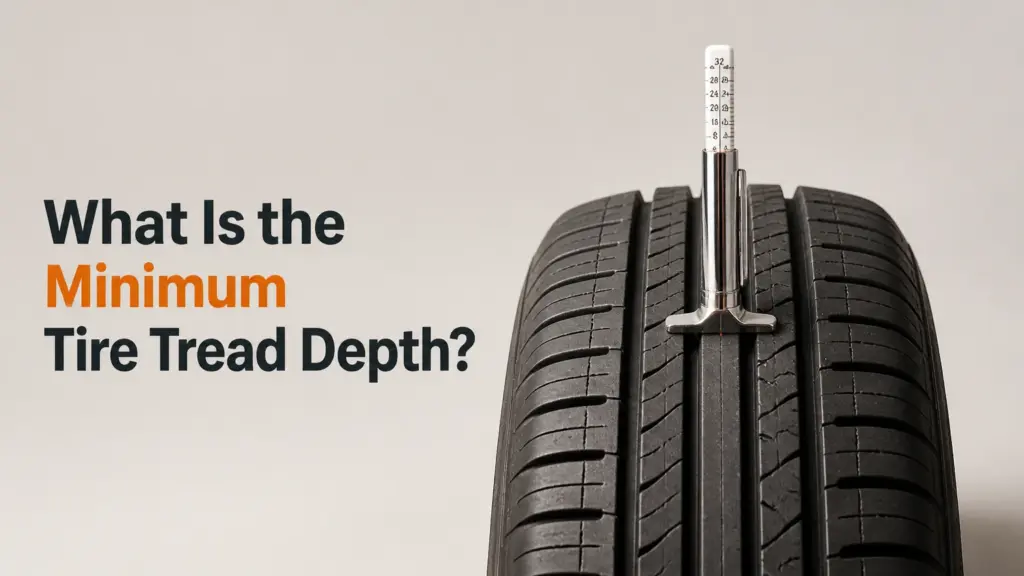
The minimum tire tread depth for most passenger vehicles in the United States is 2/32 of an inch, equal to approximately 1.6 millimeters. A tire at that depth has reached its wear bars and should be replaced, but drivers who regularly encounter rain or snow should normally replace tires earlier for better braking and water […]
What Is Good Tread on a Tire?
Good tread on a tire is generally 6/32 inch, or about 4.8 mm, of remaining depth or more. A tire at 4/32 inch may still be usable, but wet-road performance has already declined, while 2/32 inch is the worn-out replacement threshold recognized by U.S. tire-safety guidance. Key Facts at a Glance What Tire Tread Depth […]
What Coin Do You Use to Check Tire Tread?
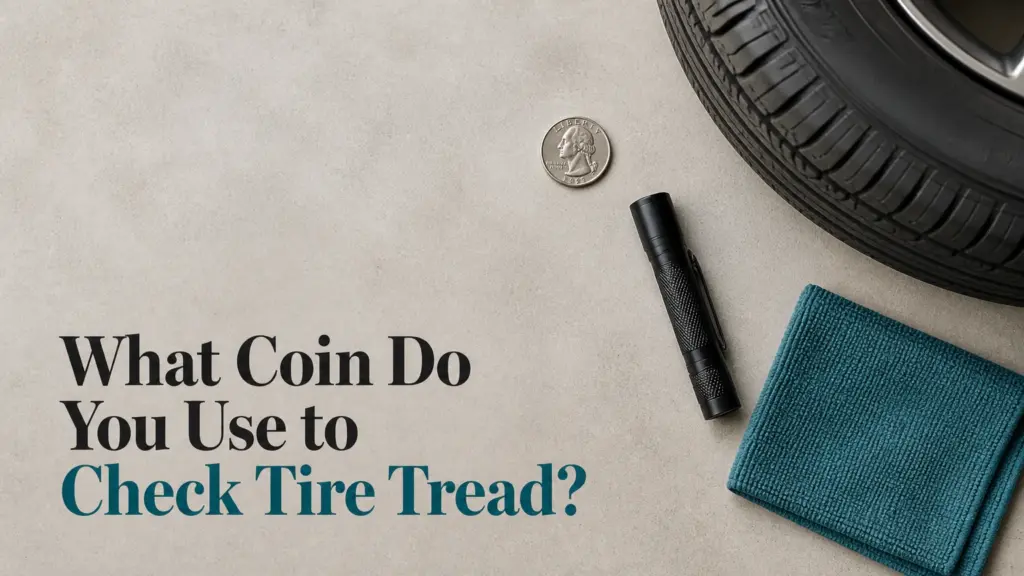
The most common answer to what coin do you use to check tire tread is a U.S. penny, inserted with Lincoln’s head pointing down. A U.S. quarter is often more useful because Washington’s head provides an earlier warning near 4/32 inch, while the penny mainly identifies tread approaching the 2/32-inch minimum. What Coin Do You […]
How to Use a Penny to Check Tire Tread
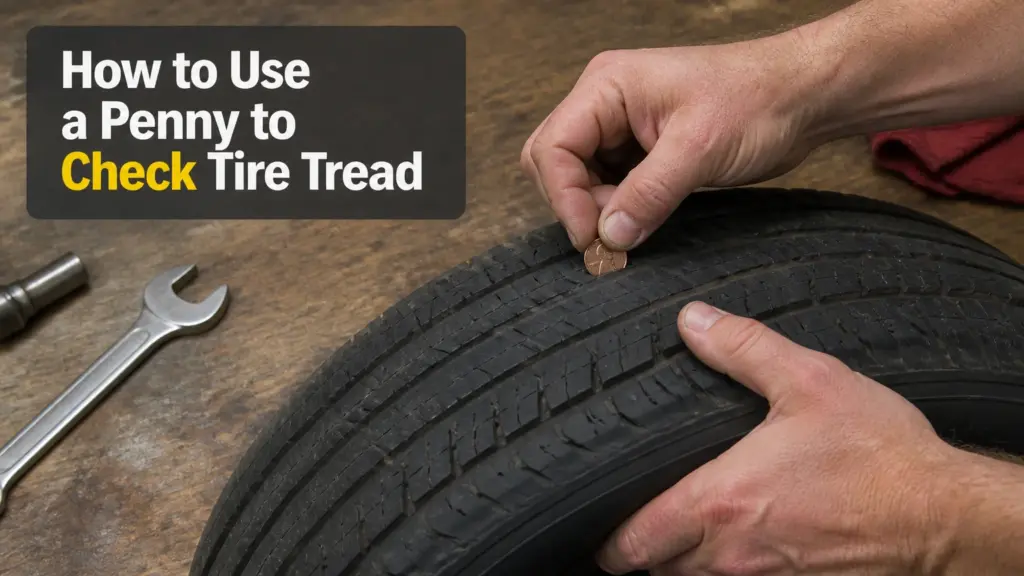
To use a penny to check tire tread, insert the coin into a main tread groove with Abraham Lincoln’s head pointing downward. If the tread covers part of Lincoln’s head, the groove has more than approximately 2/32 inch of tread; if the entire head remains visible, replace the tire. Key Facts at a Glance Before […]
Should I Replace Tires at 4/32?
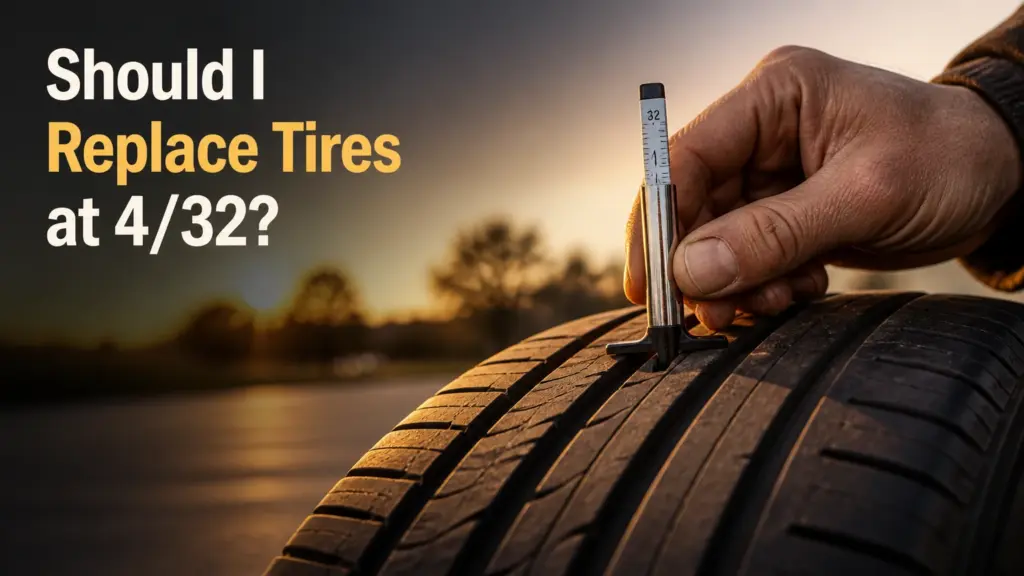
Yes, you should generally replace tires at 4/32 inch when you regularly drive in rain, standing water, snow, or highway traffic. Although 2/32 inch is the commonly recognized minimum replacement point, independent testing shows that wet braking and handling can deteriorate substantially by 4/32 inch. Key Facts at a Glance Should I Replace Tires at […]
Is 7/32 Tire Tread Good?
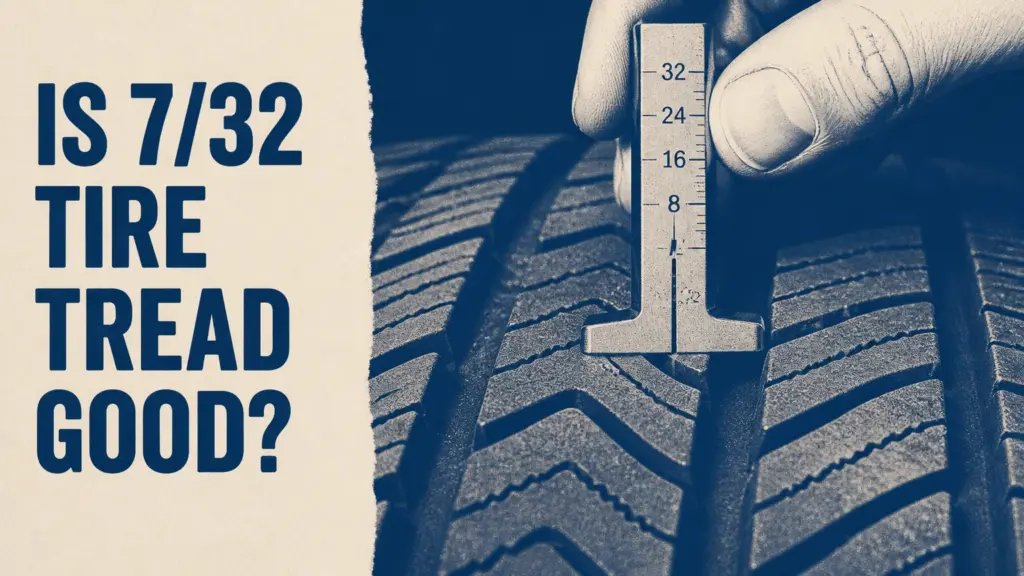
Yes, 7/32 tire tread is good for most passenger vehicles and normal driving conditions. It represents light to moderate wear, remains well above the common 2/32-inch replacement limit, and normally provides useful wet-road traction, provided the tire is evenly worn, properly inflated, undamaged, and not excessively old. Key Facts at a Glance Is 7/32 Tire […]
How to Tell When Tires Need Replaced
To tell when tires need replaced, check tread depth, wear bars, tire age, sidewall condition, air-pressure stability, and changes in how the vehicle drives. Replace a tire immediately if the tread reaches 2/32 inch, cords are visible, a sidewall bulges, the tread separates, or the tire has damage that cannot be safely repaired. Before You […]
How to Tell If a Tire Needs to Be Replaced
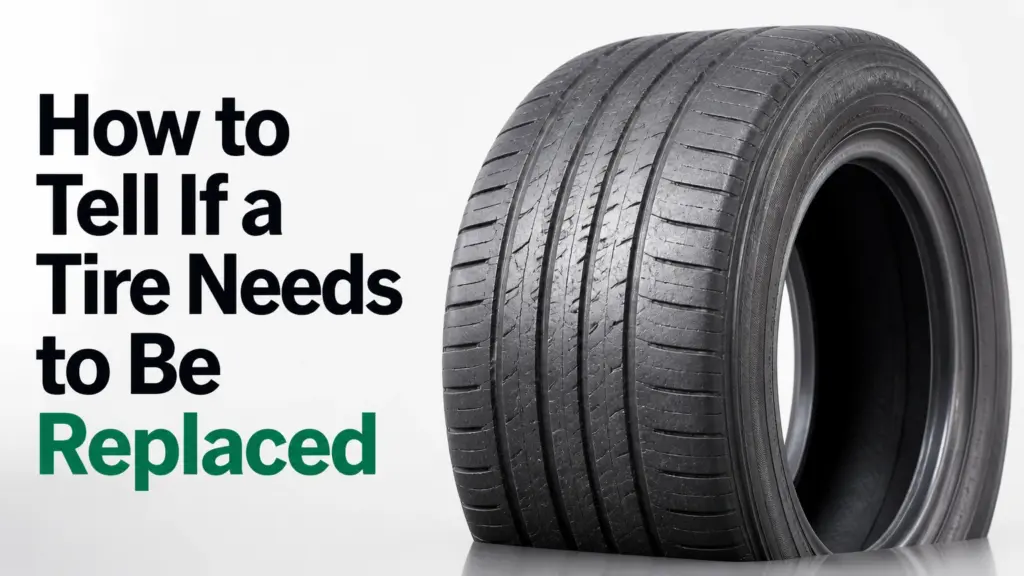
You can tell if a tire needs to be replaced by checking its tread depth, sidewall condition, age, inflation stability, wear pattern, and driving behavior. Replace the tire immediately if it has exposed cords, a bulge, deep cracking, sidewall damage, separated tread, or tread worn to 2/32 inch. Key Facts at a Glance When Does […]
How to Measure Tire Tread Using a Coin
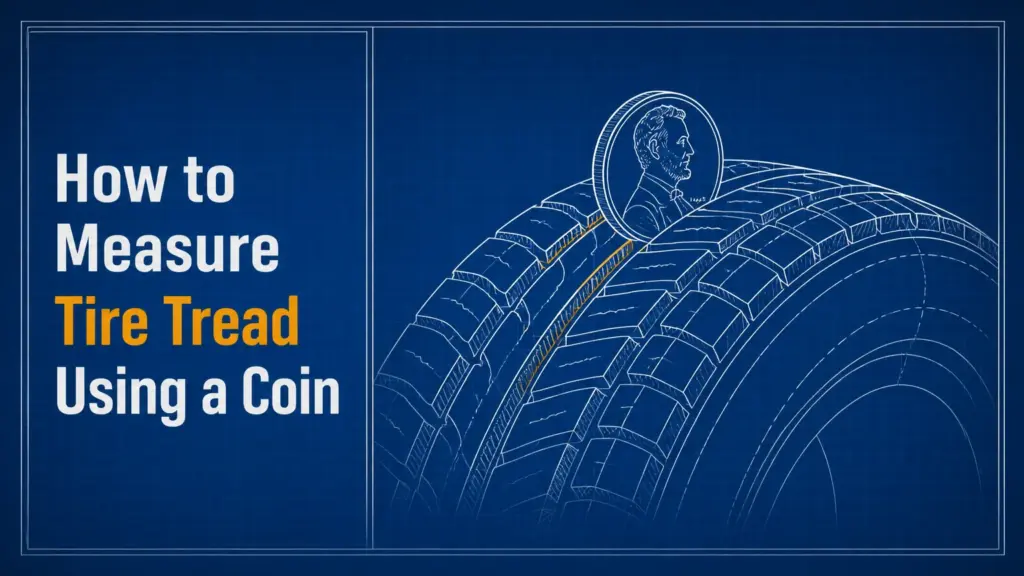
To measure tire tread using a coin, insert a U.S. penny upside down into a main tread groove with Lincoln’s head entering first. If the top of Lincoln’s head remains visible, the tread is approximately 2/32 inch or less, so the tire should be replaced. Repeat the test across and around every tire. Key Facts […]
Can I Drive Long Distance With a Patched Tire?
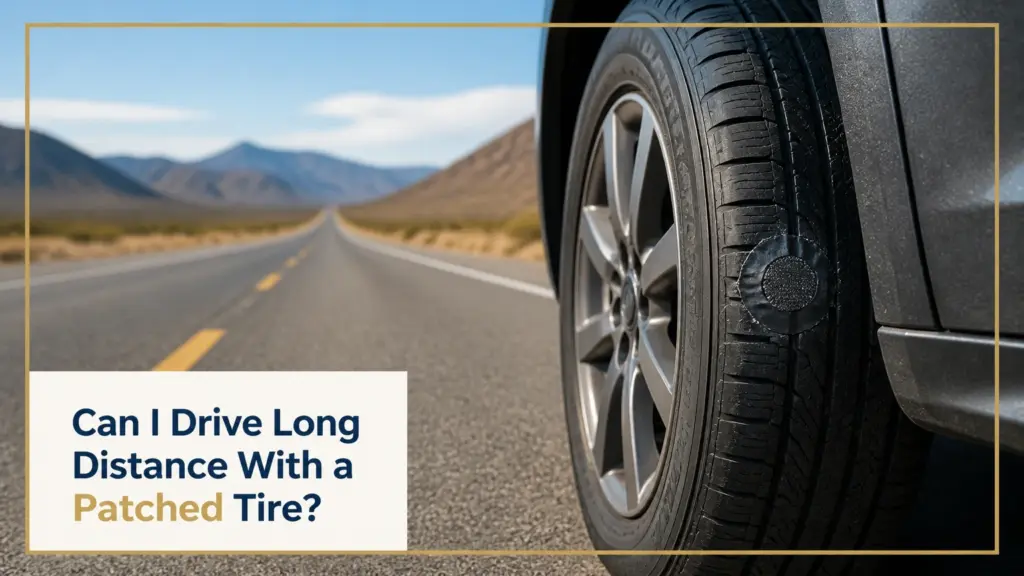
Yes, you can safely drive long distances with a patched tire, provided the puncture was permanently repaired using a USTMA-approved combination patch-and-plug unit applied from the inside of the unmounted tire casing. Temporary external string plugs or spray liquid sealants are not structural repairs and are strictly unsafe for highway speeds or extended trips. What […]